
The horror the horror
"Whatever Doesn't Kill Me Makes Me Weirder and Harder to Relate To", and other books that describe the way we live now.

I have been unwell so I have been reading a lot. First I found and read a crazy paperback mystery set in the Congo in the 1940s called Cabinda, by an author called Matthew Head. That made me want to re-read Heart of Darkness, also set in the Congo but fifty years earlier, by Joseph Conrad. (This was also prompted by the fascinating episode on Joseph Conrad on “The Rest is History” podcast as well as the review of it by Chinua Achebe that I read for a class I’m taking.) Then I read I’m Glad My Mom Died” by Jenette McCurdy, because I had to interview her a few days later, and in short order, a brand-new book – another memoir -- called ‘Whatever Doesn’t Kill Me Makes Me Weirder and Harder to Relate To, by Mary Lucia.

Now you might think those 4 books had nothing in common except that they fell into my hands in the month of November, but they actually fit together pretty well. The Congo interlude was a rumination on Empire and its consequences. But the final ones forced me to stare into the heart of darkness in the waning years of the Empire we call America, and PHEW. Just to begin: it’s astonishing how little Jenette McCurdy’s experience working as a child slave laborer in the America in the early 2000s differs from that of kids in the Congo in the 1890s. Both involve 14-hour days, physical abuse and starvation.
Literally.
McCurdy’s work is also important because of today’s obsession with celebrity and the exploitation of adolescent girls, a subject we can’t get away from in the political news as well as elsewhere. In a topsy-turvy way, the book reminded me of Joan Didion’s essay “Some Dreamers of the Golden Dream,” from The White Album, which is also about growing up in Southern California. In that chapter, Joan describes the murderess’s home milieu:
This is the California where it is possible to live and die without ever eating an artichoke, without ever meeting a Catholic or a Jew. This is the California where it is easy to Dial-A-Devotion, but hard to buy a book. This is the country in which a belief in the literal interpretation of Genesis has slipped imperceptibly into a belief in the literal interpretation of Double Indemnity, the country of the teased hair and the Capris and the girls for whom all life’s promise comes down to a waltz-length white wedding dress and the birth of a Kimberly or a Sherry or a Debbi and a Tijuana divorce and a return to hairdressers’ school.”
In I’m Glad My Mom Died, we learn what it is actually like being the offspring of a “dreamer of the golden dream.” Briefly put: it sucks.
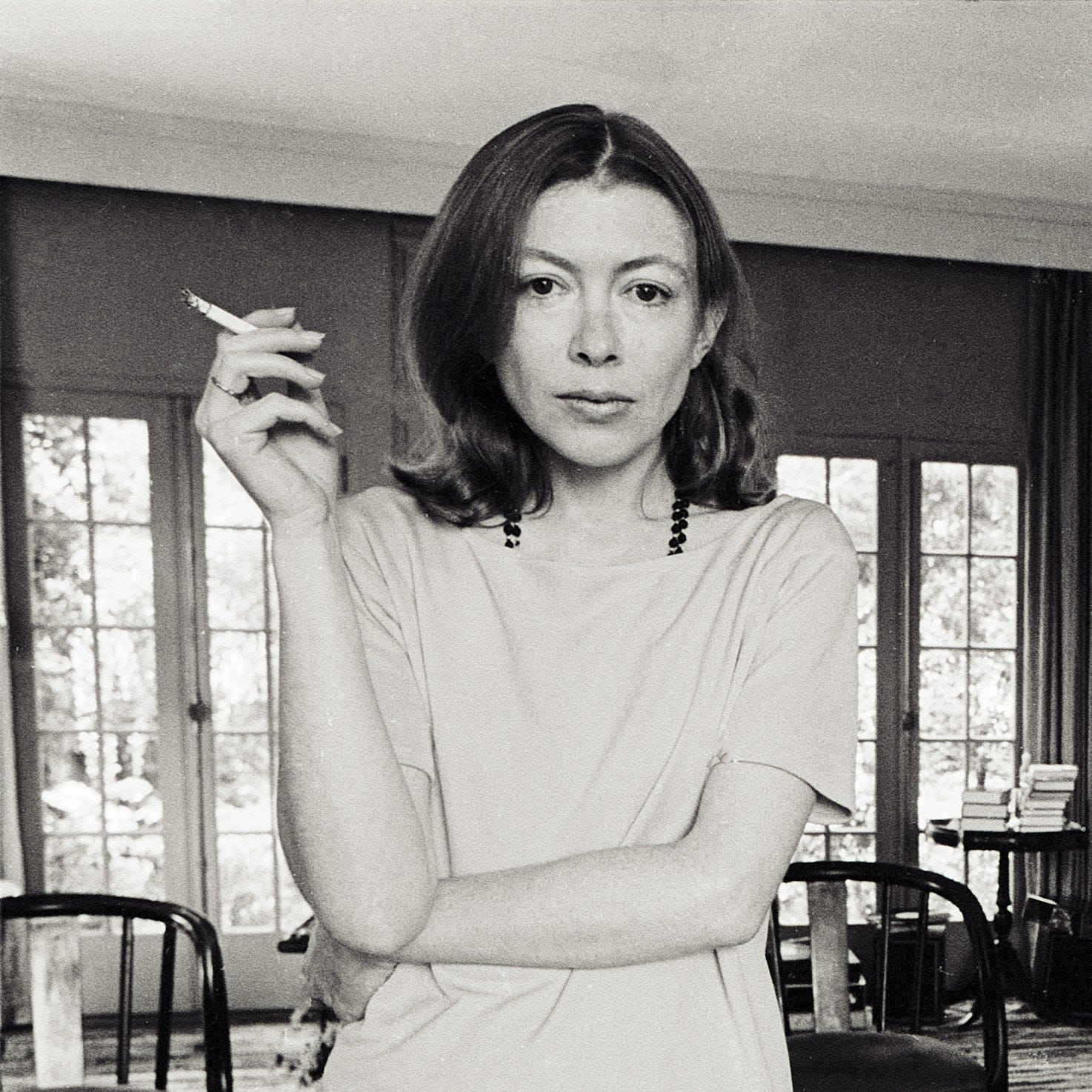
I’m Glad My Mom Died has been incredibly successful, and spent more than 90 weeks on the New York Times Best Seller list. I hope the same will be true for Mary Lucia’s new book, which chronicles her experience being stalked by a fan of her radio show, an experience which hits a lot closer to home. At the beginning of the book, she introduces herself thusly: “It is I, rogue DJ. The cilantro of radio,” and if that doesn’t hook you, what will? Anyway, take it from I, the cilantro of former rock critics. If you like the kind of thing I write about, this is a memoir you might want to pop your head into.
“Whatever Doesn’t Kill Me” is about a lot of things - aging, for one; pets and parent death, for another - but mostly it is about fear. Here’s the logline: Mary Lucia was a drive time DJ for a public radio station in Minneapolis, and about ten years ago a listener started to harass and stalk her, sending her packages of raw meat, digging in her back yard, threatening to kill her dogs, and sending her lascivious letters describing the (imagined) blow jobs he wanted her to give him. The response to this terrorism was indifference. “Bummer,” said her boss at the NPR station she worked at, while the cops shrugged and said variations of “Get a boyfriend” an/or “get a gun.” Nice.
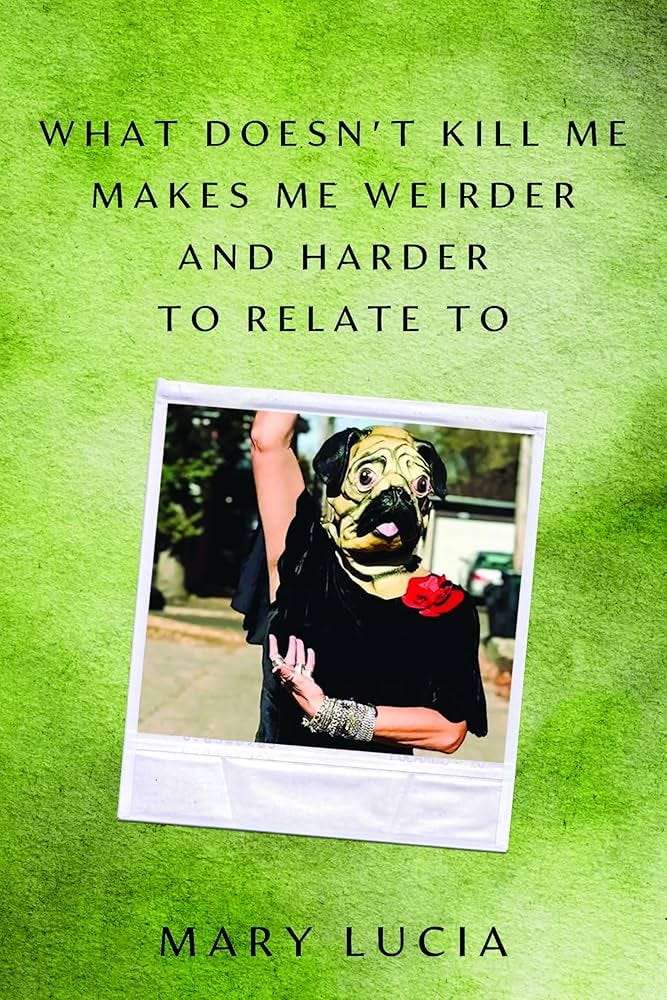
Lucia’s memoir explains in detail all the ways the law isn’t written to protect women in her situation; indeed, in the end, after the man was finally located, tried, and found guilty, the courts merely fined him and let him back on the streets. Fortunately, after he was released on his own recognizance, he left her alone. Unfortunately, he started stalking her co-worker instead. And still is, as far as I can tell.
“What Doesn’t Kill Me” is a good book in its own right, but in addition to explaining much about the current, post-twitter world that shouldn’t surprise people (but for some reason does), the experience Mary Lucia had inevitably reminded me of my own life in the public eye, when I got death threats and rape threats all the time, and my editor at the East Bay Express would congratulate me for doing so. “You’re really hitting a nerve,” he’d say enthusiastically. And many other writers I knew – it goes without saying they were guys – also just seemed either envious or dismissive of my experiences. Nothing nearly as disturbing as happened to Mary Lucia ever happened to me, but it easily could have, and in my imagination, it did.
That experience warped me. It made me weirder and harder to relate to. But so did life itself, and that is another takeaway from my reading, because Lucia’s book isn’t only about being stalked. It’s also about a life lived deeply in the throes of love of rock ‘n’ roll fandom…and about how that love can unfit you for the practice of everyday life. Most of Lucia’s working life has been spent as a radio DJ, a job which is almost nonexistent in these post-algorithm times, and that’s another thing we have in common. We both come from terrestrial times, and our jobs no longer exist, and that is endlessly jarring. At one point in this harrowing book, Lucia describes finding out that her record collection has been ruined by a leaky pipe housed above it: “It was like I lost my identity.”

And yet, losing one’s identity feels like a signature move in these crazy times, though, don’t you think? It’s practically inevitable if you’re sentient. Anyway, Georg Lukacs once described the function of the modern novel as being about “existential homelessness,” and that phrase also describes the world we live in, since Lukacs meant that the novel describes the modern condition whereby we recognize that the world we live in is chaotic and meaningless. In 1915, Lukacs’s disillusionment with the nonsensical nature of the world events going on around him, led him to name the eternal sense of heartbreak, and reading “I’m Glad” and “Whatever Doesn’t Kill Me” felt similar…as does reading the news.
As Mr. Kurtz said: the horror, the horror.
Excellent writing - as usual - and I want to go back and punch that editor in the face for you. Ugh. And thanks recommending Mary Lucia’s book - I’m embarrassed to admit I had never heard of her. Also - what class are you taking? It sounds interesting.
Oh my God, I am so sorry you went through that. And I’m sorry your editors, who I bet I know or knew, did nothing and thought it was a joke. Was assaulting you supposed to make the garbage music of these dolts better?
In a minor point, love Achebe’s critique which goes double for Apocalypse Now.
Feel better. Kit will help with that.