
Real Gone
Notes on the new film "Song Sung Blue" (currently playing at a theater near you.)

I went to church last week for Christmas. I was hoping we would get to sing some carols, but I was thwarted by the new pastor, Pastor Tom, who choose a bunch of obscure ones that no one knew the tunes to. It was disappointing, because church is pretty much the only place in regular people’s lives where a plain person like me can sing really loud in public.
Usually I look forward at Christmas time to singing carols, because there is true bodily pleasure in singing. I thought it was mean of him to deny us an opportunity to sing “O Come All Ye Faithful” in favor of some 3rd century chanson; that pastor reminded me of those guys who have record collections full of obscure acts or alternate versions, and who say snobby things like, “They were only good before they signed to Warner Brothers.” Anyway, the only other time a person gets to unselfconsciously belt out songs aloud is when seeing they go see a tribute band, at a bar or a wedding or a waterfront, or what have you.
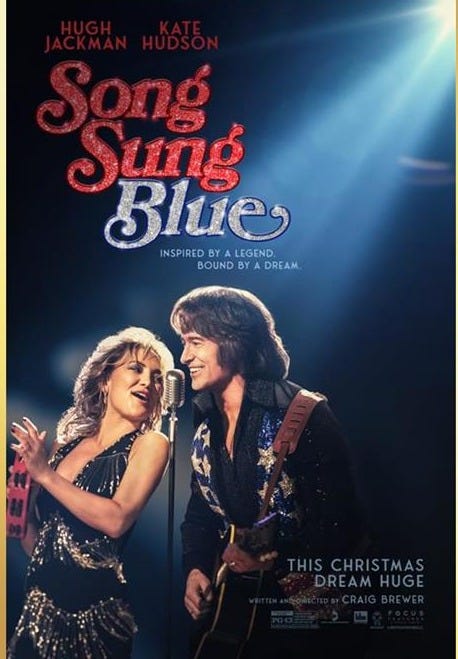
That is why, a few days later, I was reminded of that incident whilst watching the new movie “Song Sung Blue.” It’s a biopic, of sorts, only instead of being about a rock star, it’s about a rock star impersonator. It stars Hugh Jackman and Kate Hudson as a duo called Lightning and Thunder, who performed what they call a “Neil Diamond Experience” at restaurants and casinos around Milwaukee sometime in the early 1990s.
Back when I was a critic, I thought that tribute acts, and even cover bands, were quite a degraded exercise, and I never would have deliberately gone to see one, but lately I’ve changed my tune. True, the ones I’ve seen lately aren’t the same as the ones depicted in the movie. Today’s tributes are born of necessity, as when the artist is dead, like Warren Zevon, or the band, like REM or the Talking Heads, has disbanded. I like to think seeing such things is more like going to the symphony and hearing music by Mozart, as opposed to going to the theater and seeing someone dressed up as Mozart, but this may be splitting hairs.
If you believe in the importance of aura, then it’s like buying a print of the Mona Lisa instead of going to the Louvre.

Anyway, the point is, there is an economic aspect to the world of tribute acts. At that time the movie is set, in the 1990s, Neil Diamond himself still toured, so seeing an impersonator of him was a cheap simulacrum. And there’s nothing wrong with cheap, but I wish the movie had discussed the economics of that world better: the economics, and the mindset, and the aesthetics, such as they were.
Instead, it sticks to the concept as a very basic love story. Mike Sardina (the real-life Diamond impersonator portrayed by Hugh Jackman’s character), falls in love with a woman named Claire, played by Kate Hudson, who believes in his dreams, both of making a living as a musician, and of Neil Diamond as some kind of monolithic cultural giant whose music deserves to be aped.
Mike can – and does -- play the music of many other dad rock legends, but the one he most adores is Neil Diamond. He feels an outsized reverence for this corny music. Of course, taste is objective, and judging people by it now seems very classist: in my old age, I have come to believe that there is no such thing as “bad” music, and that our attitude towards acts like Diamond back in the day was simple snobbery. Clearly there is pleasure to be had in a song like “Africa” or “Don’t Stop Believing” or, to bring it back to the movie, “Sweet Caroline,” all of which my friends and I despised at the time they were released. But there is also danger. In 1939, Clement Greenberg described kitsch culture – and I am going to put Neil Diamond in this category, feel free to disagree – as being a dumbed down form of high culture, adopting many of its exterior trappings but none of its subtleties.
“Kitsch,” he wrote, “is mechanical and operates by formulas. Kitsch changes according to style but remains always the same, Kitsch is the epitome of all that is spurious in the life of our times. Kitsch pretends to demand nothing of its customers except their money – not even their time.”
Surely there is a great movie to be made exploring how kitsch operates in music, and in America, but alas, “Song Sung Blue” isn’t that movie. I did like that it took place in a regional space and class status area which is ignored area in films about music and that it treated music fans with dignity. It also showed how tribute bands allow a musical role for people who love music but have nothing to add to it. Especially in this day and age, where music-making is considered a valueless skill in the marketplace, there’s something to be said for seeing a way for it as a career path, and also, kudos to the Mike Sardinas of this world, who not only have nothing to add to the music world but love.
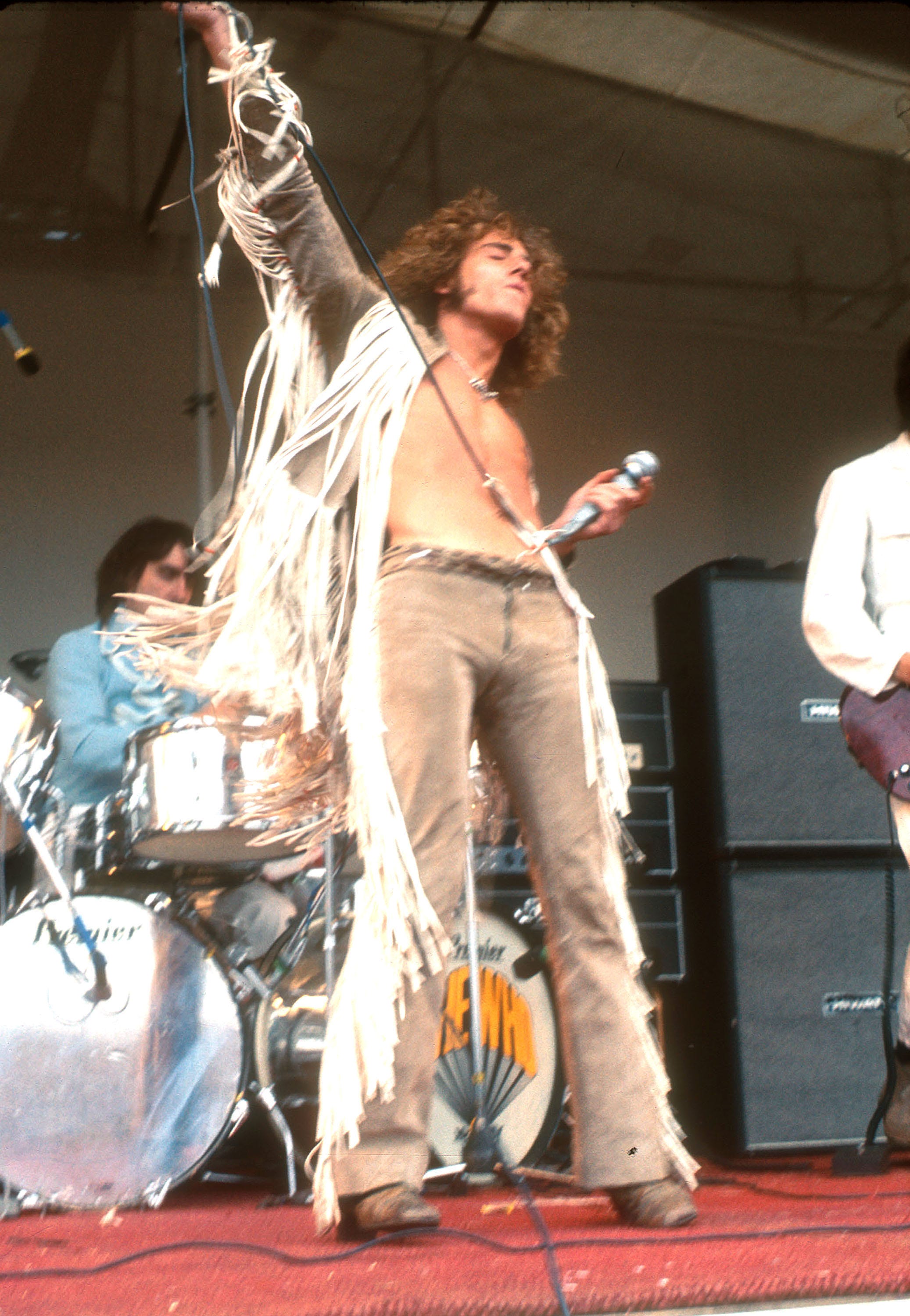
That said, it is evident that people like Sardina appreciate rock’s gestures more than its content. No doubt he loved the songs themselves, but he’s also extremely interested in wearing spangles, and making his arm go round and round like Roger Daltrey and then pointing at the crowd and waggling his finger.
I so applaud this film’s basic tenet, which is that the spirit of rock lives everywhere – at karaoke bars and in Thai restaurants, at AA meetings and county fairs -- but I also think it’s a pretty limited take on a complex topic.
To the Mike Sardinas of this world, ‘rock’ is a sensibility, not a genre. In her 1964 essay “Notes on Camp,” Susan Sontag calls a sensibility, “A private code, a badge of identity even,” and adds that, “to describe it is to betray it.” In this film, the sensibility that is betrayed isn’t Neil Diamond’s; it’s grunge. As previously mentioned, the movie takes place in the 1990s, and the world it shows is very different from the musical world that I inhabited at that time, but there is one scene in which the two intersect, and that is when Lightning and Thunder are asked to open for Pearl Jam, and Eddie Vedder performs “Forever In Blue Jeans” with them. This is an incident that really happened, and in this film is portrayed like a straight up triumph. But I am not sure that’s what it really was. Indie bands in the 1980s loved to send up cheesy acts of the 1970s, and grunge bands went one step farther, performing songs by a wide array of ever-stranger pop acts to stamp them with their own sound, or, more generally, just to be ironic and funny.
“Camp rests on innocence,” said Susan Sontag. “But also, when it can, it corrupts it.”
Did those artists LIKE Tony Bennett, Neil Diamond, Frank Sinatra and so on? Yes, in a way, but it isn’t the same way that the movie sees the gesture, and the misinterpretation – the lack of humor – jarred. In the scene in the question, the warm embrace of the grunge audience, which is in direct contrast to an earlier scene where the band is met with angry jibes at a biker bar because the patrons want to hear Skynyrd, is correct: that is how a grunge audience would have met with Lightning and Thunder, but it would have been because the duo was seen as earnestly humorous, not because they saw it as great art.
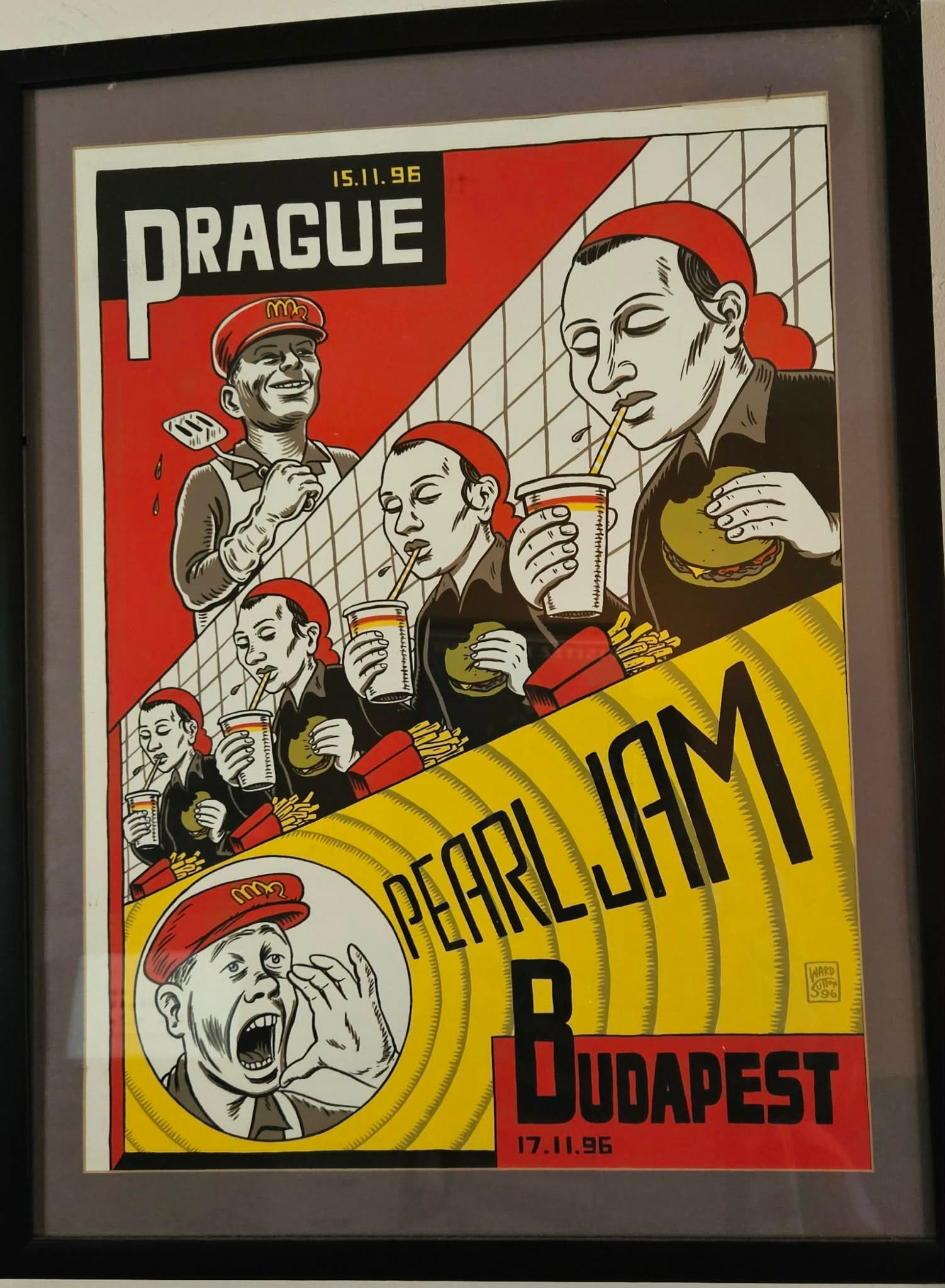
For me, this scene pointed out the great flaw of this movie, which is that we, the audience, are required to be rooting for a protagonist whose metier is deeply suspect. But nevertheless, it made me tear up. I wasn’t at that particular Pearl Jam gig in Milwaukee in 1995, but I saw them many, many times in that era, in places like Missouri, Salt Lake City, Prague, Budapest and Istanbul. The actor playing Eddie Vedder didn’t look a bit like him, but the scene correctly evoked the time and place that informed my whole youth, and I can’t even name how weird it is to see that being portrayed (or even mis-portrayed) as historical, on film.
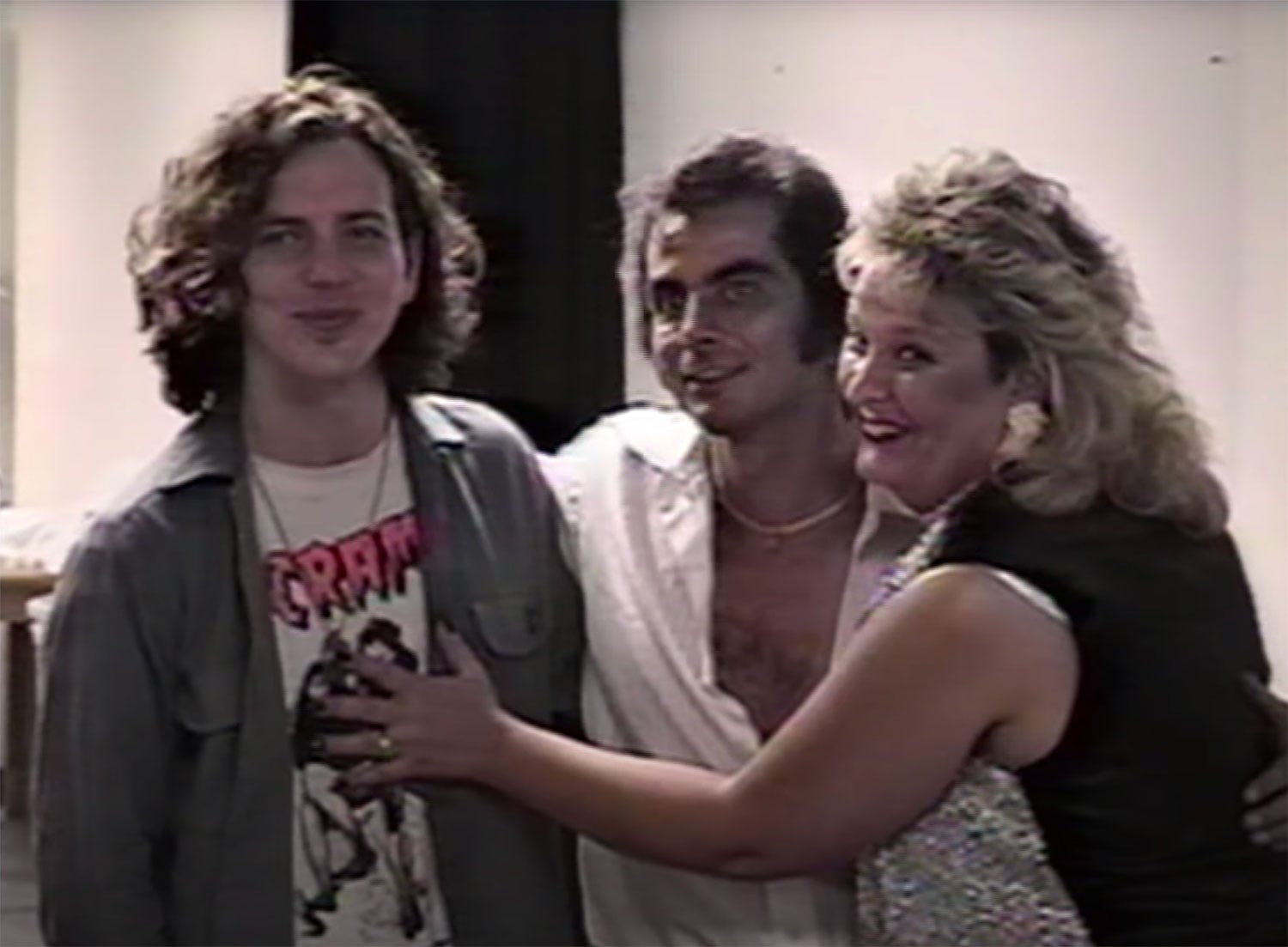
That was my world and my world view, my outlook, my people. And now it is gone. Real, real gone.
So I was actually at that Pearl Jam show and it was first confusion, because most people didn’t know anything about Neil diamond and many people thought it was him. Those of us who knew better kept saying “that’s not him” and people were still arguing about it on the newsgroup for at least a week. From my perspective the crowd was warm toward the scenario bc they thought it was another version of Eddie performance art and not out of any affection towards Neil Diamond. The fanbase back then used to call Neil Young “Neil Old” and largely hated Mirror Ball as much as the Neil Young fans did (there was a lot of blame placed on PJ for influencing Neil in what the Rusties largely believed was the wrong direction, ignoring the historical evidence that Neil always did exactly what he wanted to do). These were the same Pearl Jam fans who thought that EV “rescued” “Let My Love Open The Door” and made it into a “better” song. I haven’t seen this and will definitely wait for it to come to streaming but I had been wondering in the back of my mind if the characters behind that story was the same as the incident in 1995 and was chuffed to find out via the official PJ account that it was. Another comment on cover bands-I had a friend who lived in Austin, MN, which is literally in the middle of nowhere and bars there would organize bus trips to go see the larger more professional cover bands like the B Street Band and when I made a snide comment she explained that most people where she lived would never make it to a big city to see the actual bands and there’s a point there that I’m much more sympathetic to now that I’m old.
Brilliant writing. And that picture of Eddie Vedder is even better.