
Nowhere Man
"Deliver Me From Nowhere," playing now at a theater near you.

Nowhere Man
There were a lot of reasons I wasn’t attracted to seeing the new Springsteen bio-pic “Deliver Me From Nowhere.” I was down on it in part because it starred Carmy from The Bear, and partly because Bruce Springsteen was my dear cousin Jeff’s favorite artist and I have had a hard time listening to his music ever since Jeff died in 2011. I had a feeling I’d end up going anyway, and I did, but I need you to picture me entering the Cineplex the other day with my arms straight out in front of me and walking straight-legged like a Zombie. It was like I was being dragged in, as if magnetized, from a wire connected to a hard place in the center of my heart.
I tried to be open-minded, as did my companion, my cousin Jeff’s sister (who is also my cousin, obviously). We were trepidatious, thinking we might end up in a weep-fest, but in the end, it was OK and we didn’t think about Jeff once throughout the entire movie. You know why? Because, as I texted Jenn later, I did not believe that Jeremy Allen White was Bruce Springsteen for one single second.
As I said, this was a good thing in that it prevented us from unnecessary sadness. But it probably doesn’t speak well of the movie. There is a scene in it when Springsteen’s manager Jon Landau (played by Jeremy Strong) plays the tape of what will become “Nebraska” to the head of the record label for the first time, and the label head says, “This isn’t for me. And I don’t know who it is for.” And that’s exactly how I feel about this movie. If it’s for you, then great! I wouldn’t risk taking anyone under 50, or anyone who isn’t already deeply into Springsteen, but I know people who have enjoyed it a lot, and more power to them.
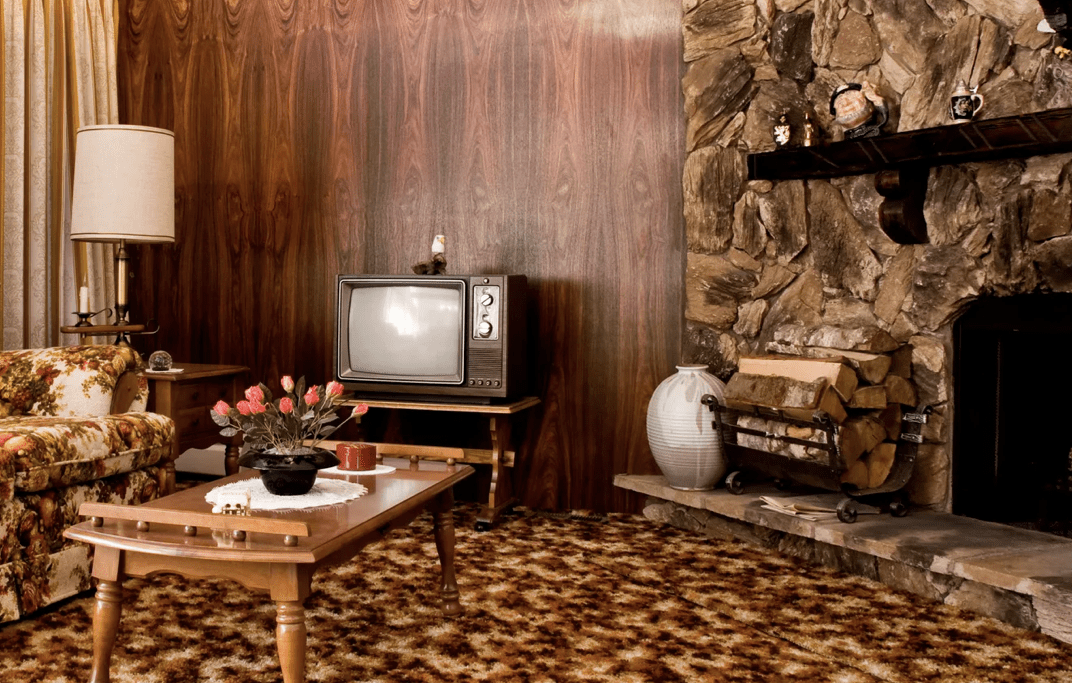
There are many things I didn’t like about the film, but I’d rather concentrate on its strengths, and what I liked best about it, was the set design. The year is 1981, and visually and aurally it was extremely evocative of that era. I loved the drab cars and clothes and houses, and the enormous amount of wood paneling we saw in every room we visited. I loved the wall papers, the haircuts, the posters that were (or weren’t) hanging in the boardrooms of Manhattan, the lamps in the bedrooms, and the recording studio itself.
Another thing that is good about the movie is the music. Everything to do with music is great, like when Carmy, I mean Bruce, lies on the floor listening to “Frankie Teardrop” by Suicide, or when, to comfort him, Jon Landau plays “Last Mile of the Way,” by Sam Cooke. At one point Carmy – oops, I mean, Bruce – drives to a split level house in suburban Jersey in a 280Z and the radio is playing “Urgent” by Foreigner – I know, horrible, but it really helps to contextualize what a huge contrast Nebraska was going for, why the record company was so squawky about it, and why, in the end, its authentically haunting sound was so admired by critics.
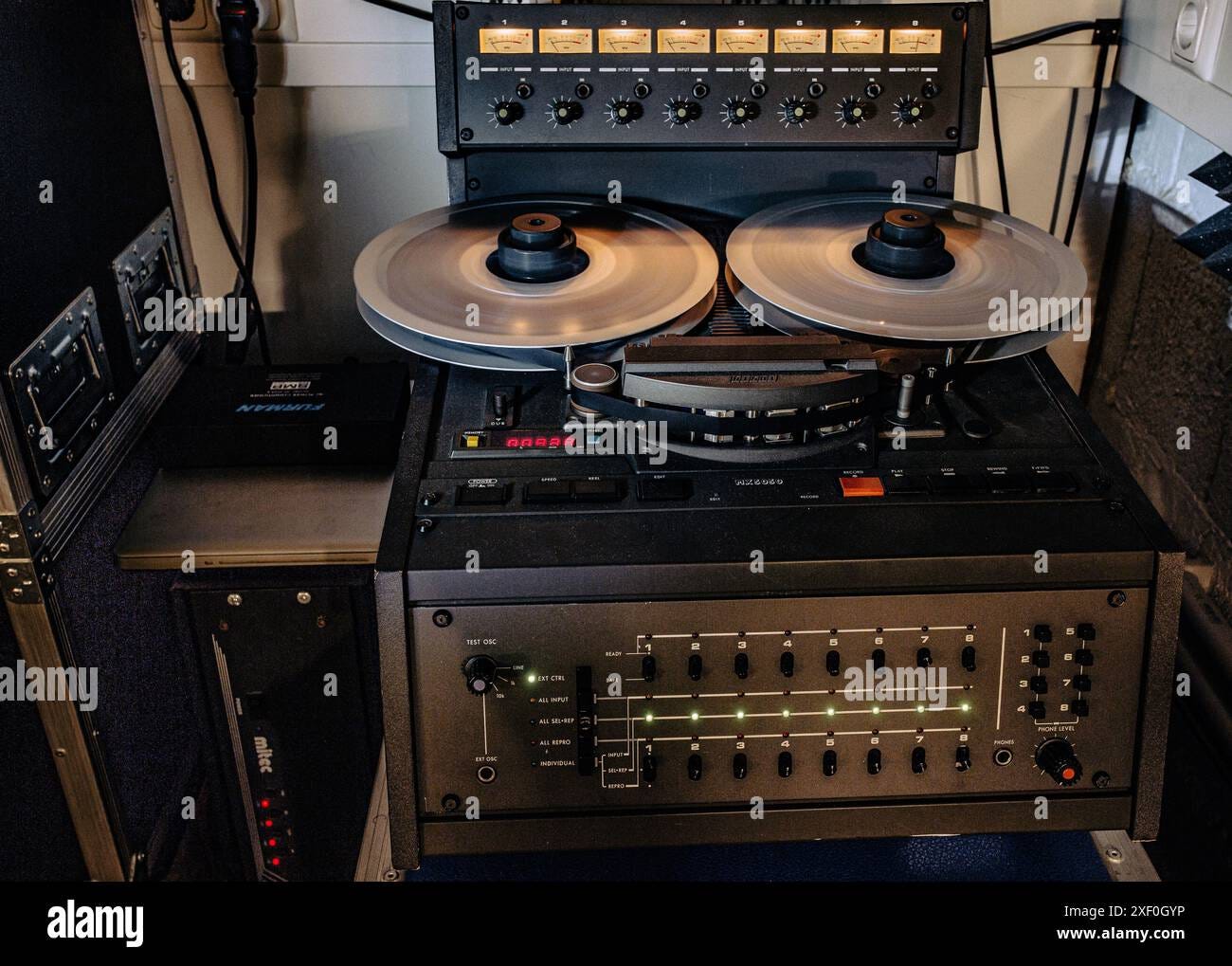
As those scenes indicate, the whole movie is full of old worlde media. Phones hooked to walls, answering machines, cassette tapes with no covers (kids, ask your mom why that’s a problem), reel-to-reel tape machines, car radios, and an emphasis on songs chart positions on Billboard (a magazine that kept track of airplay), and I liked seeing them the way I like seeing ponies prancing around in old westerns. And there’s also a beautiful scene where they’re pressing the vinyl onto a master, and as that scene definitively proves, this was a movie for vinyl fetishists.
But here’s the thing. While I don’t mind that the film overtly, and un-objectionally, fetishizes the way music was made and distributed in the 20th century literally, I did have trouble with the way it also fetishizes a particular world view from that time, in which the hero’s journey is characterized by the hero being both a jerk and a genius, a man-baby whose depression or daddy issues or whatever is taken very seriously, such that everyone around them falls into sympathetic ecstasies. This is also what I don’t like about The Bear – and why it’s so difficult to separate Carmy from Bruce: not because JAW is a bad actor, but because both characters follow that narrative arc. I know it’s a common trope. But to me it feels quaint.
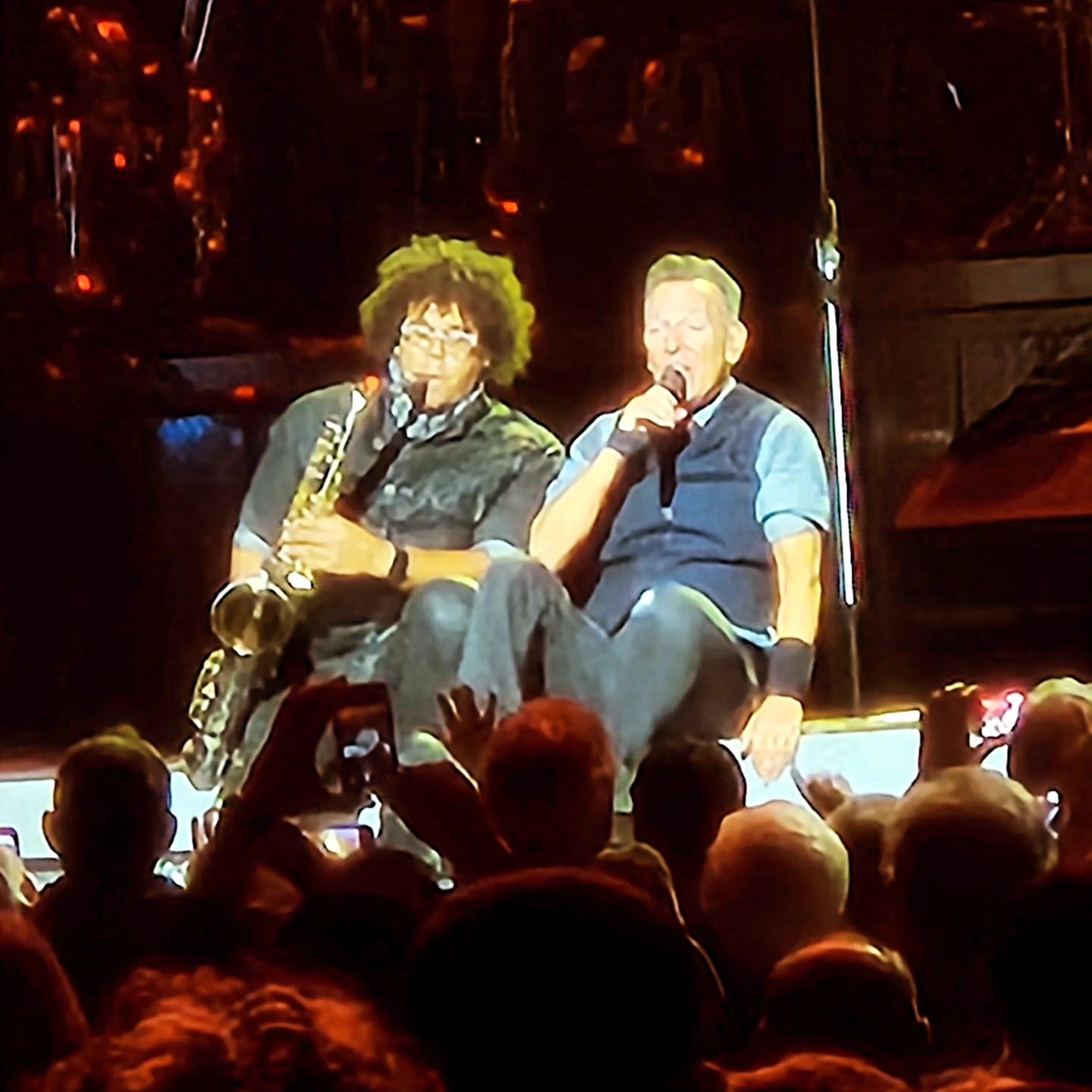
None of this is meant as a critique of Bruce Springsteen, “Nebraska” or the book this film is based on. I wrote about seeing him perform last year, so please click on this if you want to know my opinion about any of that. Nor am I saying that Bruce’s struggle with depression (or anyone’s) is unworthy of serious film-making. But it’s a hard thing to capture on film – as is the process of artistic creation, this film’s other big ambition. To that end, we are asked to watch a lot of I Carmy – I’m sorry, I mean Bruce -- staring mournfully at the gaping maw of speakers and amplifiers. They reminded me of the video for the Replacements song “Bastards of Young,” which just depicted the amp playing the song for four minutes. But that was supposed to be tongue-in-cheek, whereas this movie is anything but humorous.
As I said, if you liked this movie, great, but it was made for you, not me. I knew that it wasn’t made for me early on, during a scene where Bruce plays an impromptu gig at the Stone Pony to a crowd of ecstatic women. I looked at that scene and immediately thought, oh look, there I am! That was me, and my role in that world…or at least, that seems to be how it, or I, came off. But looking at how my role in that world was being reflected by these filmmakers did not please me, because in some weird way it is inaccurate to my own truth about experiencing live music. One day I’d like to see a film – or let me put it differently, I’d like to WRITE a film – in which the hero’s journey is not that of the beloved but struggling rock star, but that of the person in the audience whose life has been transformed through the humility of listening to it.
Sadly, all those women are probably making more money than you too! Things are just different now. But I will always remember being at a show in Nijmegen around 1991 -- young fresh fellows at the rooseje doorn, and the sound person was FEMALE, and it blew me away. And she also sang backups from the sounddeks for the opener (the watchman.) At the time I thought: Oh to be a gorgeous dutch girl doing sound at the roosjedoorn AND singing backups! It was so - transformationl - but nowadays, what I think is: she was doing alot of the labour and he getting the applause.
Great. You should definitely write that movie!! It will be phenomenal.