
Muddy Waters
Letter From London Pt. 2: A visit to Eel Pie Island

On my last day in London, I visited Eel Pie Island.
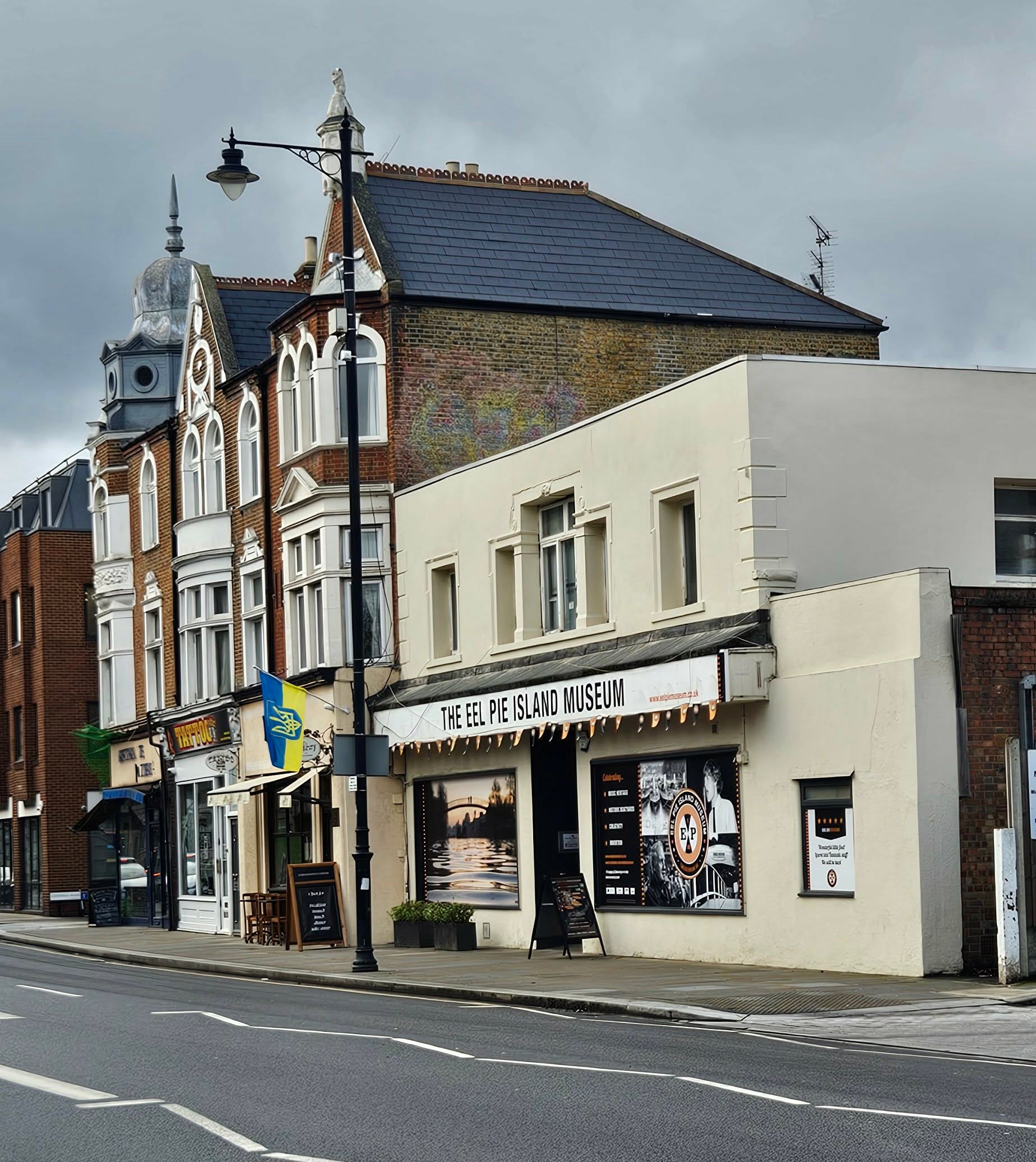
The name sounds a little imaginary, like something out of Peter Pan or the Wind in the Willows, and very in keeping with the day I spent a few weeks earlier at Gingerbread House City, only Eel Pie Island is a real place, not a commercial entity. In a way, Eel Pie Island is like the Gingerbread House City, in that there is something eternally whimsical about it, and it is truly a place that could only exist in England. But it is not an act of imagination like The Thousand Acre Wood": rather, it is as a post-war heritage site where cultural history actually happened. If you grew up in West London in the late 1960s, you might have gone to it one weekend night, stopping at the Richmond station, walking across the river at Twickenham Bridge, and then stepping onto a little flat skiff that ran by a chain-link mechanism.
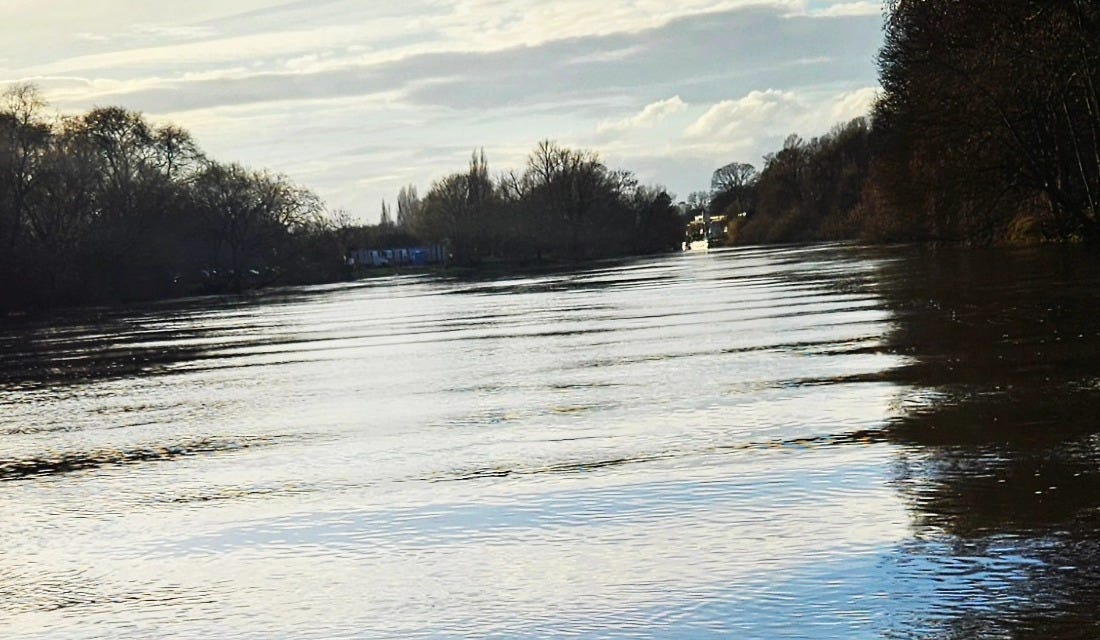
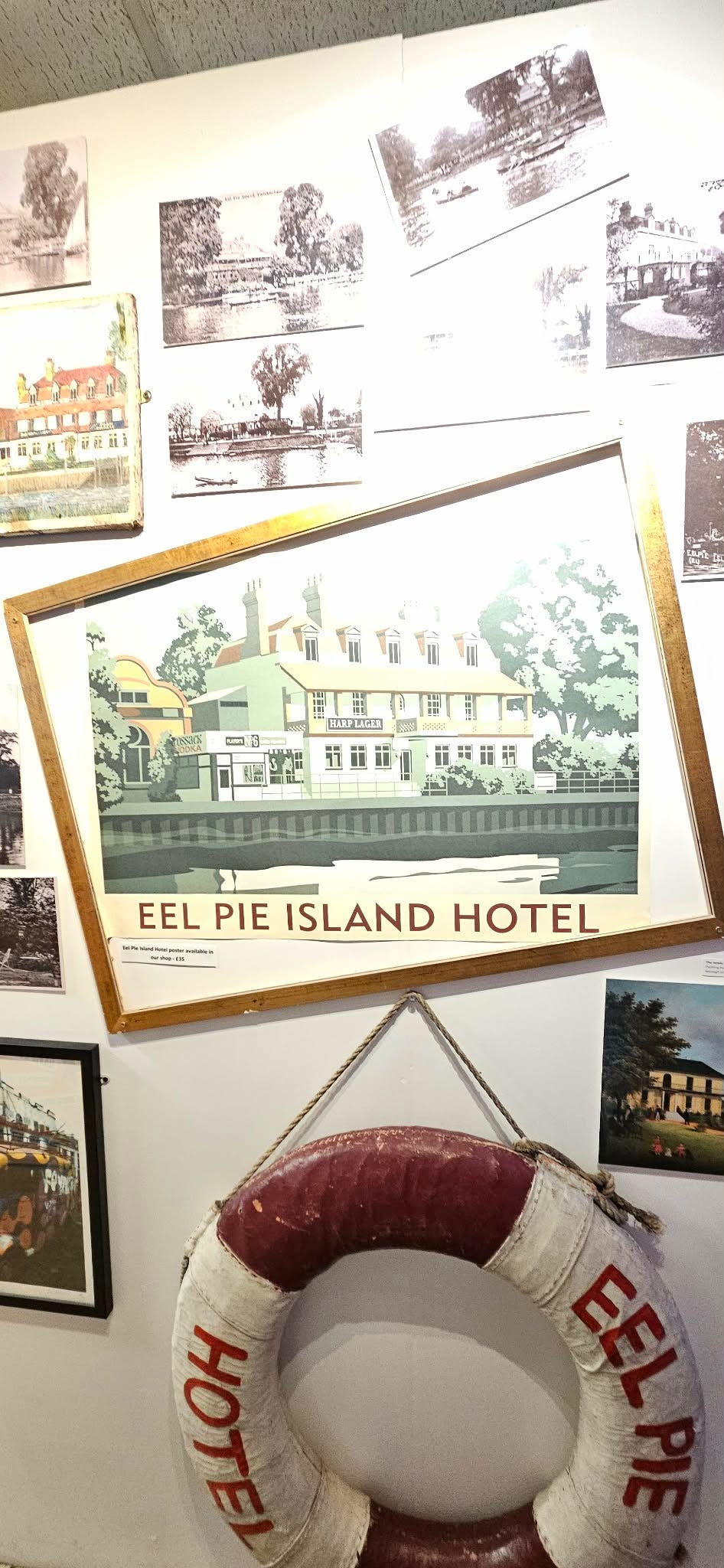
Eel Pie Island - a tiny tuft of land in the middle of the Thames, kind of between Twickenham and Hampton Court – has been a destination for pleasure from time immemorial. In the days before people took holidays abroad and when even the seaside seemed far away, Londoners would go there for the day to get away from the big smoke: Alexander Pope hung out there in 1719, Dickens wrote books there in 1860 something, and other notable men parked their mistresses there throughout a large swathe of English history. If you’re interested in the British Invasion or 60s music in general, you might have heard of Eel Pie Island but I was surprised to find out that there has been a hotel and ballroom there since at least the year 1748, i.e. prior to the American Revolution. There’s a been a dancehall at the hotel there ever since, and in the 1950s, it began hosting jazz concerts featuring famous black musicians.
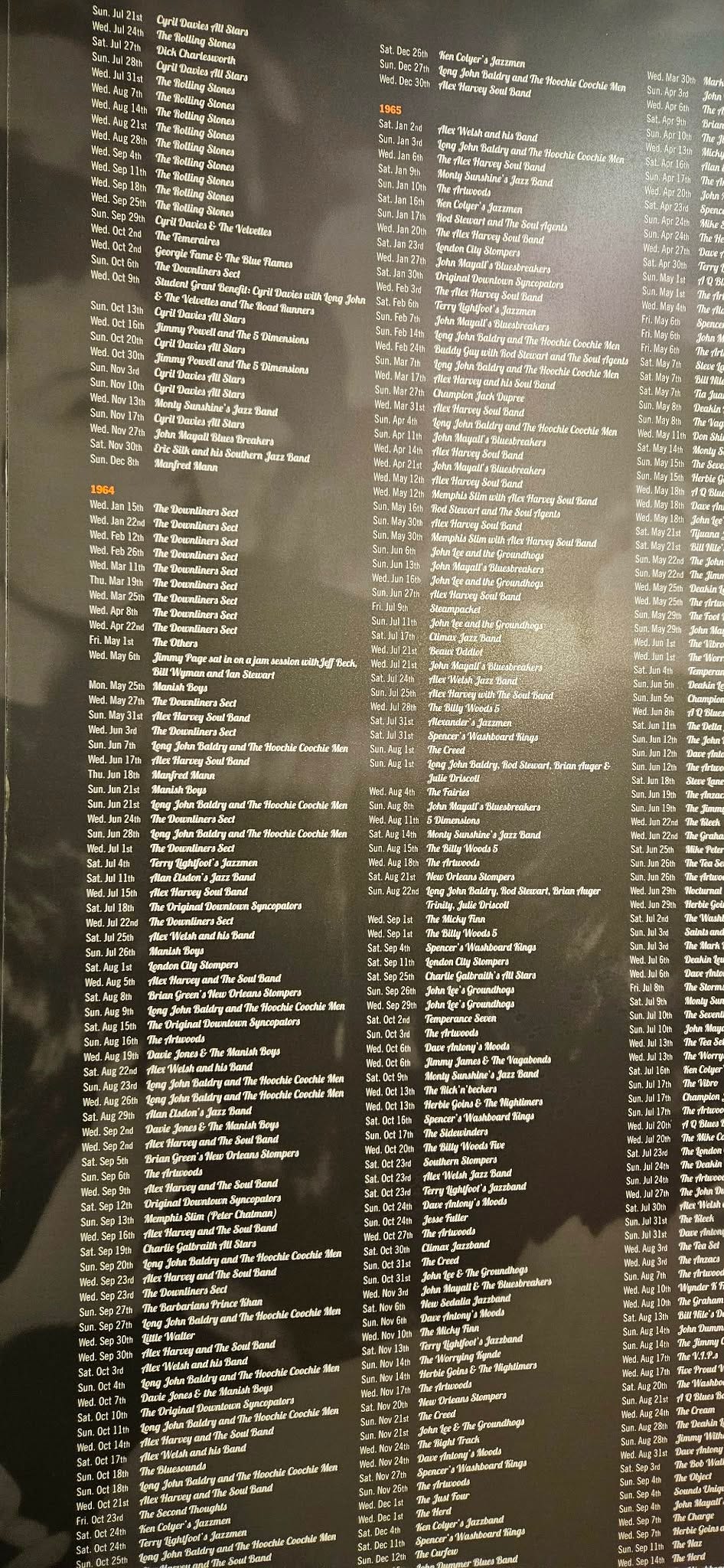
Then in the early 60s, some of the local venues who were sick of the racket that teen pop groups were making at nearby pubs, sent them off to Eel Pie to play at a what later was called eelpie club - bands like the Kinks, the Faces (featuring Rod Stewart), Screaming Lord Such, the Mannish Boys (Bowie’s first band) and Pink Floyd. Later on, Genesis and Hawkwind (proto Black Sabbath), and way too many others to name, played there as well. From 1963 to 1964 the club’s house band was the Rolling Stones, and there are still people today - people in their 80s - who remember seeing them there and some of them volunteer at the museum to give tours.
The building itself burned down in the early 70s, so you can’t go see the actual place these gigs happened, but the museum that exists now on the shoreline nearby the site is packed with pictures, ephemera and memorabilia. One entire wall is taken up with a list of every gig that happened there in the 60s, and when I sent a picture of it to my brother he texted back, “I wish every club did this!”
In many ways, the Eel Pie Island Museum is like the Rock n Roll Hall of Fame, but it’s different in a crucial way. The Hall of Fame is in a huge and shiny new building on the shores of Lake Erie, and contains hallowed (and not so hallowed) artifacts that have been gathered from all over the country, and from every era and genre. But the Eel Pie Island Museum is locally sourced and generated and is run by the people who attended it back in the day. It is a place that colored the worlds of the people who live around there in a way that I found both poignant and intense. So for me, the Eel Pie Museum is a reminder of what music’s real place in the world is: of how it has stained the landscape with its and shaped people’s lived experience.
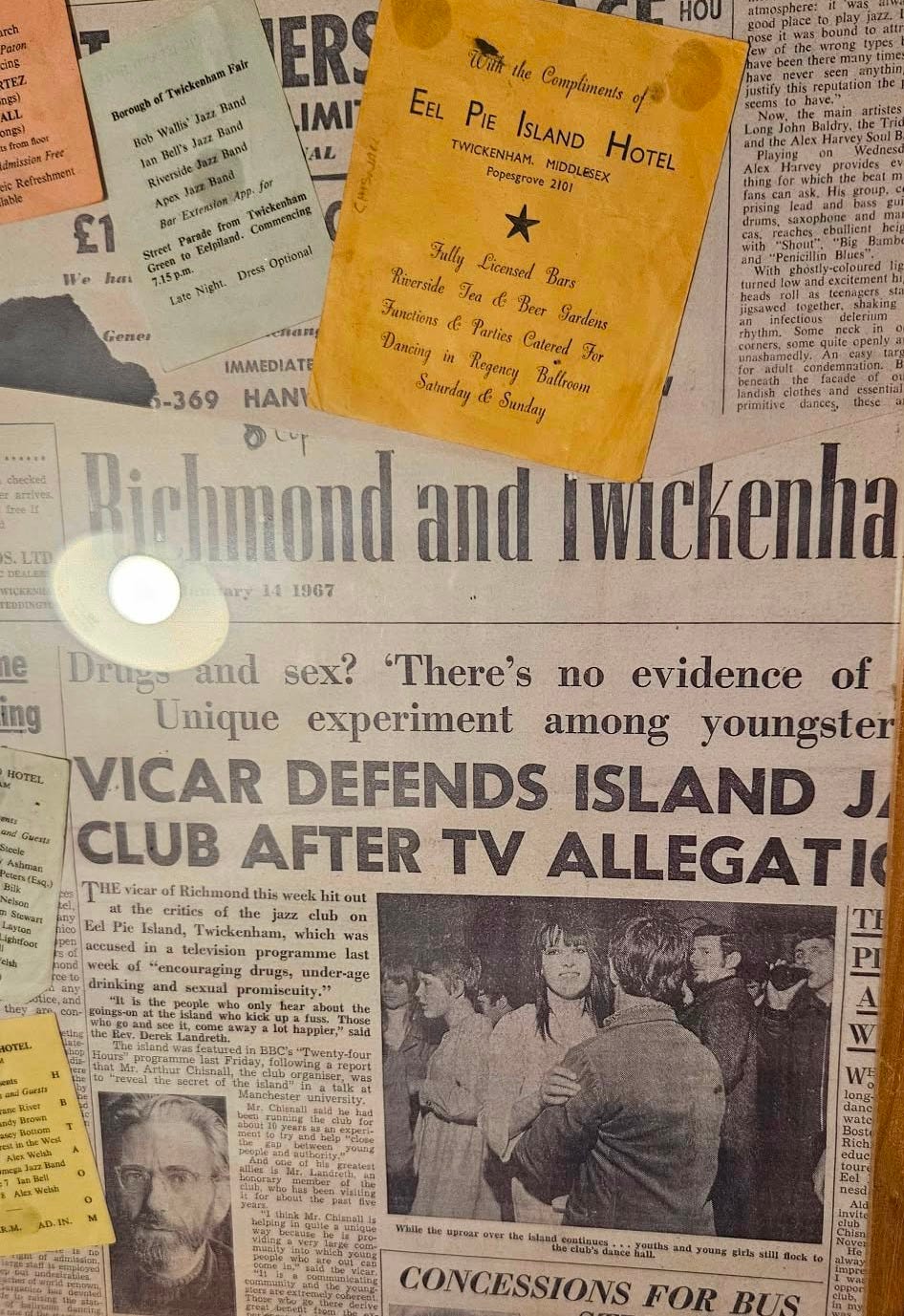
The Eel Pie Island Museum is actually pretty new. It only opened in 2018, spearheaded by a local legend and Eel Pie Island resident, Trevor Bayliss, who was known for inventing the wind up radio. (Note to self: remember to get one for the upcoming Civil War.) The museum is run on donations and by volunteers and when I was there I was shown around by a woman named Wendy who was 73, i.e. just old enough to catch some of the last shows on the island before its demise. She never saw the Stones there, but she hitchhiked to the Isle of Wight Festival to see Jimi Hendrix (“It was scary”), and once, years earlier than that, she found that the Beatles, then at the top of their fame, would be coming to town the next day to film part of Help or Hard Days Night, one or the other.
Wendy and her friends all cut class the next day to go hang out over the bridge and scream their heads off when the band appeared, and on the following day it turned out that only one single student had turned up for school. Her name was Marion and she was the class brainiac.
“She was always studying, and probably didn’t care about pop music,” Wendy told us, but I wonder how Marion spins the story at this date. Is she proud that she was the only one at school that day? Did she ace her A Levels and wind up at Oxford because of it? Maybe Marion now tells everyone she actually did see the Beatles, or maybe she is still sad and that she didn’t have any friends to tell her they would be there…but either way, she reminds me of that story by Ray Bradbury, about the planet that only had sunshine for one hour every 7 years, and the little girl who gets locked in a closet by some bullies for the duration. In other words, sixty years after it happened, it still sort of breaks my heart.
But then music does, doesn’t it? It saves lives and it breaks hearts, sometimes simultaneously. It did mine, anyway. I mean, I have loved and written and thought about rock music for the past century, but my connection to it has waned as I got older, and, anyway a lot of what iIdid in the past was just sales: I was just a barrow boy of sorts, a noisy little hawker, and I was also blinded by some crazy sense of music having a right kind and a wrong kind, which is obviously very wrongheaded. No, I don’t love seeing live music like I used to, but Wendy told me she goes to gigs two or three times a week, all of them at the local pubs, and I think that speaks to the way that history functions. Like all the best heritage sites, the Eel Pie Island Museum and Eel Pie Island connected me to a past which was also my future. If you’re in London anytime soon, I highly recommend you visit.
I did a reading at an Eel Pie pub/venue for ‘Lipstick Traces.’ It was a little intimidating: also on the bill was Ron Wood, reading from his memoir. But in the crowd was Howard Devoto, one of my favorite people in the world because of the Buzzcoks’ ‘Spiral Scratch’ and Magazine’s ‘Shot by Both Sides.’ We talked. I told him I would never have even thought of the book without’Boredom,’ te dum te dum.
I wish I had been there. My ex took me to the Hope and Anchor or whatever it was in Islington where punk bands played. Many of the best gigs I ever saw were in little clubs (including cbgb, Max’s, or where I could get close enough to forget where I am)