
I Want You Back
The movie Michael, now playing at a theater near you.

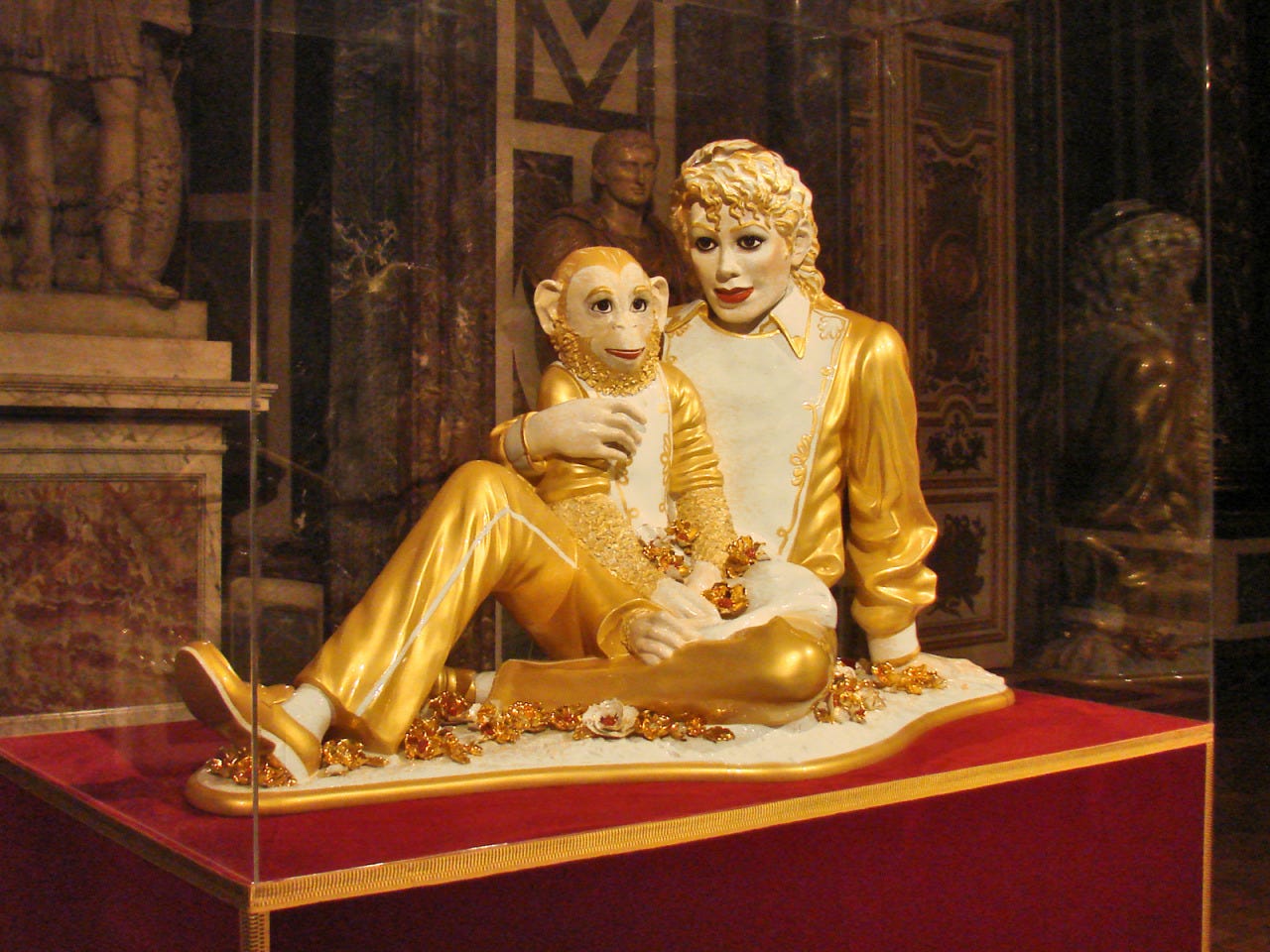
A long time ago, when I was a media studies major and read stuff about the history of television programming, I recall someone or other saying in one of my textbooks that the easiest way to make a TV show popular was to cast a chimpanzee in it. And I get that perfectly, because personally, I LOVE the sight of a chimpanzee and would tune into absolutely anything to see one. That is why I was totally thrilled when Bubbles the chimp finally appeared on screen in the new Michael Jackson biopic Michael. Even if (as I suspect) Bubbles was CGI generated, he made me gasp aloud with his cuteness. But he also sort of broke my heart – which I suspect is the whole point of his inclusion.

Bubbles’ dramatic role is to remind us that Michael Jackson was the loneliest boy in the universe. But he has another, and possibly less deliberate, role as well: with his big eyes and tidy diaper, he twitches on that twin sense of the uncanny valley versus real life dichotomy which Michael himself always wanted to breach.
Bubbles’ palpable falseness, which, like the fakeness of this simulated Michael Jackson, shines through his extremely appealing exterior, speaks volumes about the film. But they aren’t quite the words you think they are – or at least not to me. Michael scored a lowly 39% with ‘real’ film critics on Rotten Tomatoes, but a whopping 98% with real people, and I am here to tell you that I side with the people on this one. Doubtless all the criticism of Michael, which is getting dinged for its corniness, sanitization, and its omissions, are valid. But I enjoyed every minute of it. So maybe it IS a fairy tale, the sanitized version of Michael’s life that his family (who produced it) wants to believe is the truth. But it is also the version that we want to believe is the truth.
So what’s not to like? Fairy tale or not, the basic plot points are true, however outlandish. Did Michael Jackson, the son of a poor black steel worker growing up in the rust belt during the mid-20th century’s cultural oppression of black population, become rich and famous beyond the wildest of imaginations? Check. Did MTV, out of sheer racism, refuse to play his videos, despite his album being the top seller of all time ever? Check. Did the entirety of the black-tie clad audience at Motown’s 25th Anniversary rise to their feet in unison, shrieking with orgasmic pleasure when he did the Moonwalk on TV for the first time? And did everyone else on earth talk about it non-stop afterwards despite there being no YouTube in those days to view it on?
Check check check check and check.
xx
Michael may leave out or condense a lot of the messy awful of his life, and the dialogue is admittedly stiff. But the main character, played by Michael Jackson’s actual nephew Jafaar Jackson, is utterly convincing in the role, and the main points about Michael Jackson’s weird psychology – that his dad was an abusive tyrant whom he was terrified of, that he grew up extremely lonely due to his childhood rock stardom, and that he was a once-in-a-generation, talent -- are very much to the fore.
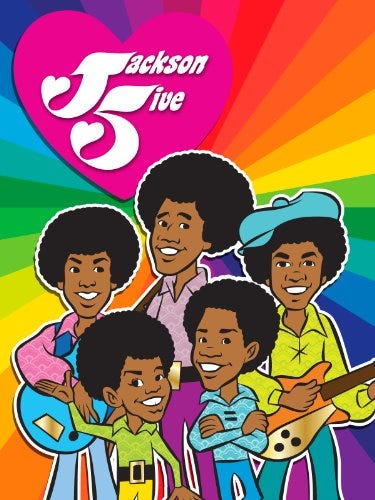
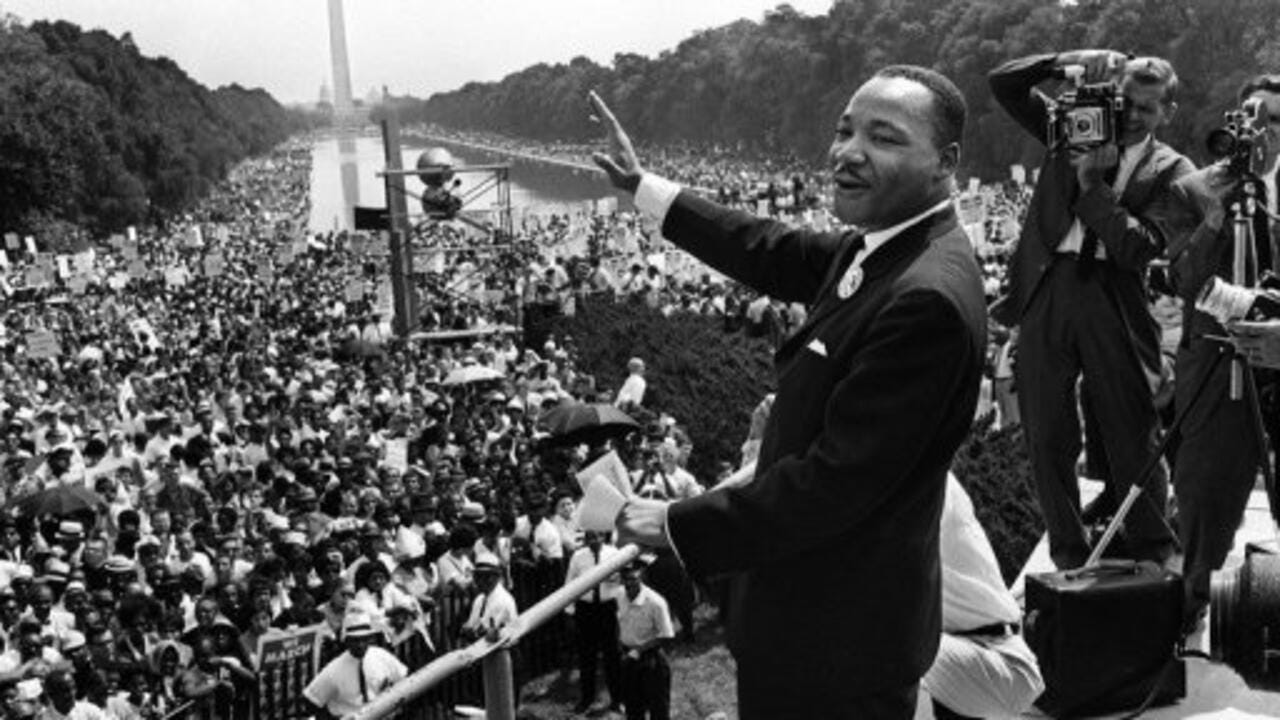
Besides, if you grew up in the late 20th century, when you’re watching Michael, you’ll know all the stuff they’re not saying, anyway. I didn’t need anyone to tell me that the years after the final scene were all going to be downhill, and I certainly didn’t need to see what is in fact a terrible American tragedy played out before me. What I needed to see was a sweet recreation of the Jackson Five singing “ABC” and “I Want You Back” in small theaters around Chicago, complete with all the 70s fashions. I needed to see them performing on sound stages for television shows I faintly remember watching when I was a child, and to hear those songs ring out like bells of freedom – to ring out, and I quote, from every city and every hamlet, from every state and every city… to speed up that day when all of God’s children, black men and white men, Jews and Gentiles, Protestants and Catholics, will be able to join hands and sing in the words of the old Negro spiritual, “Free at last, Free at last, Great God a-mighty, We are free at last”. Michael Jackson didn’t say that, but it works for me here, because honestly, there is probably no more joyous and hopeful American music, no music that will make you feel like everything’s going be alright, than the music of the Jackson Five.
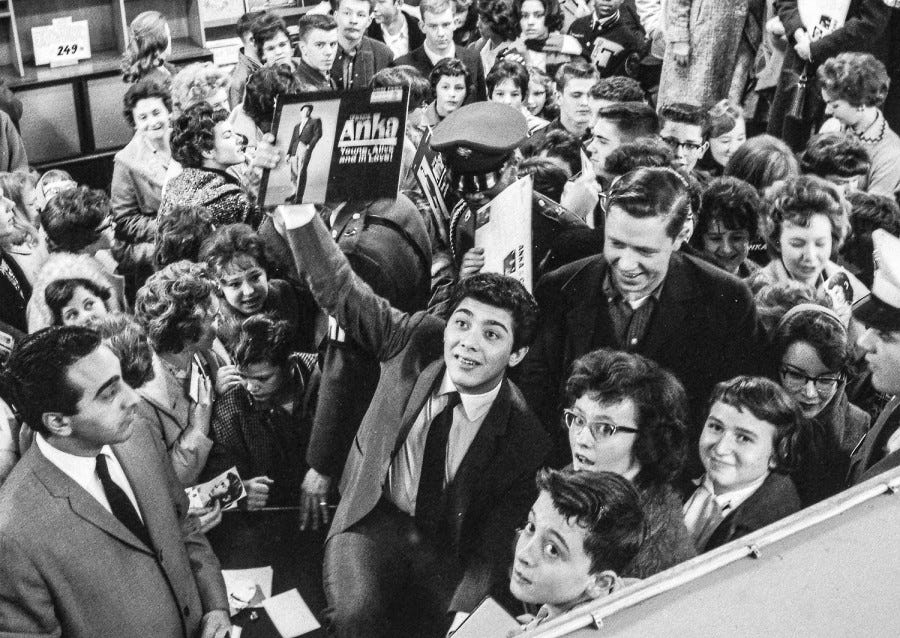
Later, the film dwells largely on an incandescent adult Michael Jackson performing solo in front of screaming crowds at Wembley and Dodger stadiums, and these scenes too worked brilliantly. I loved that the film maker allowed us to see entire songs performed, rather than snippets, and I loved that we saw the faces of the crowds reacting to him. The scenes were akin to the ones shot by the Canadian Film Board in 1961 of Paul Anka’s crowds at Freedomland in the film Lonely Boy; showing the crowds as supplicants, biblical in their fervor, and this was exactly right approach, because the pleasures of Michael Jackson’s work have always been physical ones: you enjoy them with your ears and eyes, and not exactly with your intellect.
Of course, the movie definitely has its dumb side. For example, like a few other things I’ve seen lately – like “Deliver Me From Nowhere,” “A Complete Unknown,” and the play “Stereophonic” -- this is a film that tries hard to capture the act of creation by dwelling on old media forms like tape recorders, microphones, magazines, and just plain elbow grease. So we see Michael in the studio, twiddling knobs, Michael, standing alone in front of the microphone, trying not to move his feet, Michael, in the living room, practicing his steps, Michael, directing his music videos, and practicing his dance movies, scribbling down lyrics, and so on. It’s pretty cliched, but on the other hand, after being confronted with a host of AI-generated idiocy in the endless previews we watched beforehand, it is a relief to see such devices. In some ways, the movie works as a relaxing treatise against AI, arguing against short cuts, mechanization, and technology, in favor of sheer human individuality, hard work, and actual brain-driven creative endeavor.
On the other hand, you could argue that it is just the opposite, for just as Bubbles is CGI, Jafaar Jackson is not Michael Jackson, but a simulacrum (albeit a very good one). Michael is a tribute act, but then, who are we kidding? If we want to see the artists of this era now, that is what we are fated to look at.
Michael Jackson died in June of 2009, and it was the first instance I remember of the speed of social media. Thanks to twitter, which I had only just acknowledged, I knew of his death less than an hour after the ambulance got to his house, and that in itself was pretty shocking. The death itself was shocking too, although of course it followed a similar pattern of so many rock stars: But unlike those artists, a lot of people I knew at that time didn’t care much about Michael Jackson. His lawsuits, his finances, his facial stuff, and finally, the crass and demoralizing trials he was subjected to, and so on, all had taken their toll on his reputation.
The kind of people I knew back then thought he didn’t matter anymore, but in the summer of 2009, my daughter was 7 years old and attended a camp with an almost universally nonwhite personnel, and when the news broke of his death, the counselors went into a brief fugue state of mourning before buckling down to prepare a tribute. Every day for the rest of the summer, instead of going to arts and crafts, the kids were forced to practice the Thriller zombie dance for hours, and at the end of the summer when they performed it on the library lawn, all the siblings and the parents and neighbors and the whole city of Menlo Park joined in, and everyone sang Jackson Five and Jackson songs until well into twilight.
It was absolutely spectacular, one shiny moment of love and musical oneness, and like it or not, that’s the spirit that this movie captures.
An exceptional piece, by far the best thing I've read on this film. Let me add this, anecdotally, and in no way diminishing the main thrust of the essay: I had a great friend, sadly passed now, who was an A-list television comedy writer. One day he was sitting in my living room, lost in thought. His chin was balanced on his fists, and he seemed to be almost in a fugue state. (This is all absolutely true.) Finally, after about four silent minutes, he raised his head and announced, with enormous gravity, "When you put a chimp in human clothing, it's ALWAYS funny."
Oh that’s a really lovely review. I haven’t seen the movie. (I did see stereophonic which was utterly forgettable.)