
Another country
Punk rock on the Golden Hinde, and other tales of London life

Have you ever asked yourself what the title of my blog, BRING ME GIANTS, refers to? Probably not, but it is a quote from my favorite play “Cyrano De Bergerac” by Edmond Rostand. The protagonist utters it as he’s about to go fight 100 foes who are lying in wait for him. It wasn’t in the production I saw this weekend in London – it was retranslated as “giants await” - but I still loved every single minute of it. It was exactly what a play should be: witty, romantic, and weirdly timeless. I laughed, I cried, etc, and that was a bit of a surprise, because the older I get, the less frequently a childhood favorite lives up to its reputation in my mind. Mostly, time is such a very shitty caretaker of our passions.
You know the play, right? This unattractive guy Cyrano is in love with a beautiful woman, Roxanne, who is, in turn, in love with a handsome dumbo called Christian. In order to express his true feelings in secret, Cyrano volunteers to write love letters for Christian from the front, where they’ve both been posted (it is set in the year 1640, and France is at war with Spain) and tragedy ensues.
Cyrano is a witty farce from long ago, but to me its themes are timeless. Also, I think the true test of a classic’s, well, classicalness, is how easily it can fit into the current zeitgeist. Cyrano was written in 1897, but it feels really relevant, if you consider how Cyrano’s act of ventriloquism – creating a whole persona for Christian – is a little bit like the role ChatGPT has offered to play for people. One of my students recently told me she uses the nonsense machine to craft responses to texts from guys she is flirting with on Tinder, and I was appalled.
“But what if HE’S doing that too?” I gasped.
My student just laughed but I don’t think it’s very funny. If that’s the case – which it likely is – then all that’s happening is two chatbots are engaging in idiot banter.
Cyrano’s role in this romance is a bit different than using Chat would be, because he’s really in love with Roxanne, so his letters to her ring with sincerity rather than smarm. But it is also similar, because he makes Christian seem like someone who is smarter than he is – and like someone he is not, just like social media does. By the end of the play, Christian himself is aware of this problem, shouting at Cyrano, “I have my own feelings, sir!” And Roxanne herself isn’t that crazy about the news when she finally gets it: “I have loved one man and lost him twice,” she concludes sadly as Cyrano expires in her lap.
Anyway, it is all very romantic, although I think that the perennial relevance of Cyrano isn’t so much that aspect; rather, it is that it exhibits the perennial human impulse to get someone else to do your homework for you. And also, though less obviously, that wars are wrong and stupid and endless, and finally that judging people on by their looks is just never going to work out for people how they want.
But then, almost nothing does, and nothing less seldom than technology. According to an interesting article in the most recent issue of LARB, the problem with AI is not its ability to overwrite our own feelings or make things up: as the article says, “the real threat is not the flamboyant hallucination. It’s the impossibility of knowing whether any text we now come across represents an individual sensibility or a synthetic hybrid.”
Now that Chat GPT and Claude are overtaking our communications, we’ve all become like Roxanne after learning that everything she thought about her lover was fake, i.e. living in a state of constant suspicion and dread. Maybe that’s why we all feel like we’re going crazy: because giants await us, and our courage has failed.
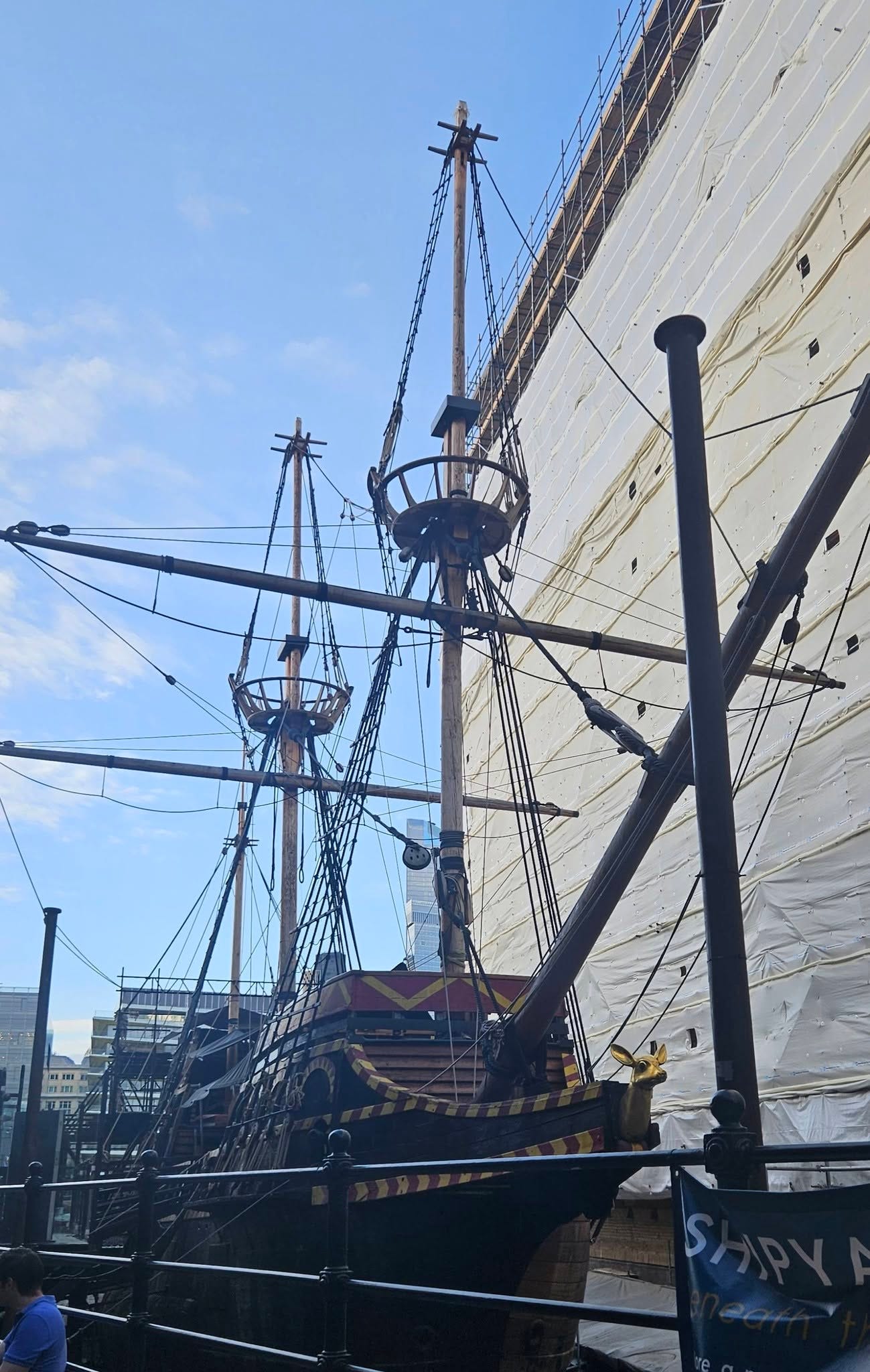
The night after seeing Cyrano, I went to a punk rock show on the Golden Hinde, the ancient ship that Sir Francis Drake circumnavigated the globe in in the year 1578, supposedly landing at Drake’s Bay in Marin, shooting sea lions at the Farallones, and giving his name to the San Francisco Bay Area.
Despite my proximity to the scenes of his exploits, I have never really thought about Sir Francis Drake but a quick peek at Wikipedia in advance of the show advised me that he was the worst kind of colonizer, a pirate and an early slaver; he even once had one of his shipmates – someone he didn’t like very much -- beheaded for witchcraft, and I mean, how bogus a charge can you get? No wonder Sir Francis Drake High School recently changed its name to Archie Williams High.
According to the podcast “Empire,” Drake, his pal Queen Elizabeth, and some other well-off people in the 16th century invented the concept of private equity in order to justify their wretched pursuits, so, in keeping with the comments I made previously about relevancy, the Golden Hinde’s relationship to actual piracy is pretty relevant to stuff going on today, since private equity and pirates and grifters and corrupt heads of state aren’t exactly a thing of the past. Still, it felt weird to be at their actual fount.
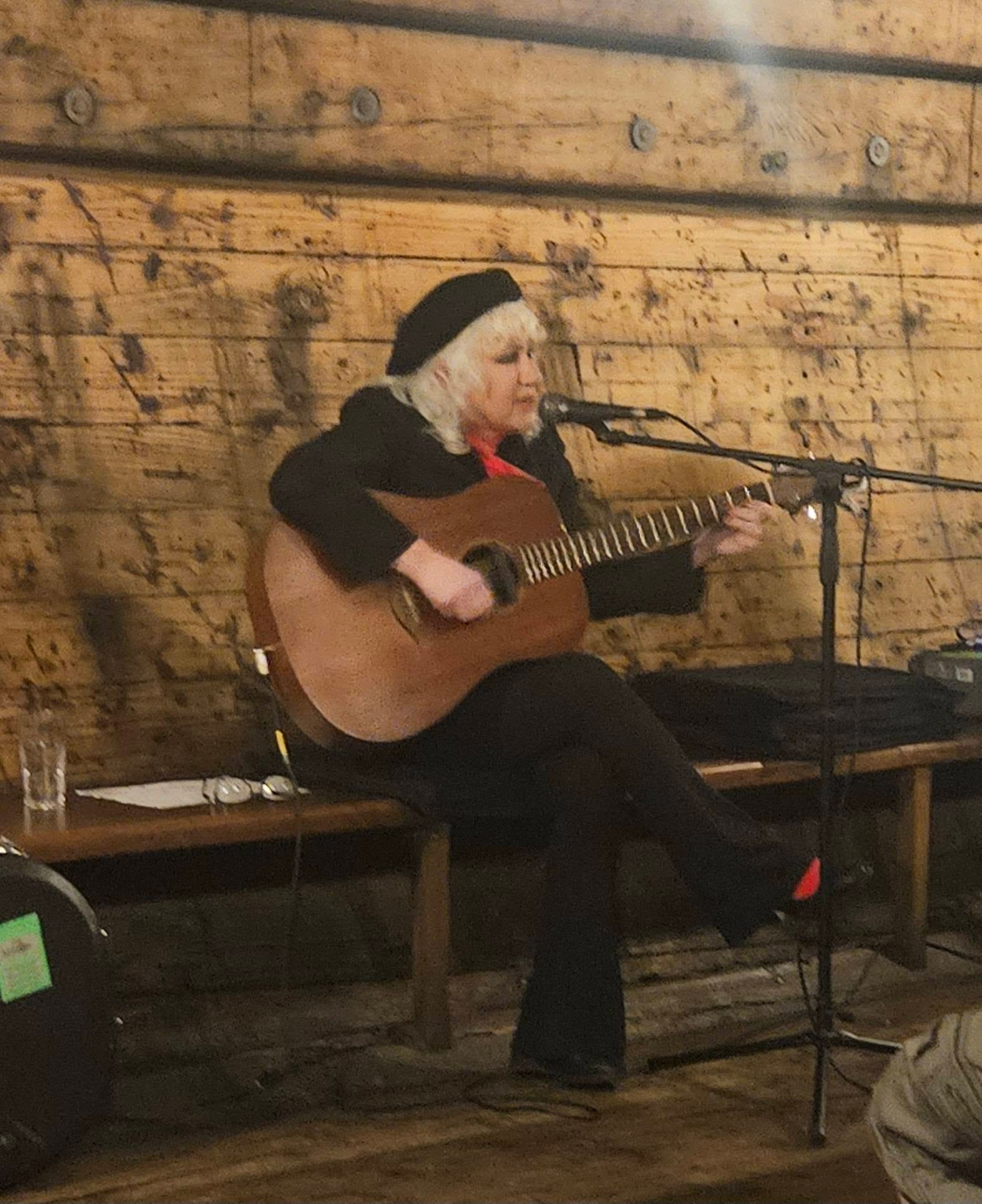
The show featured two women who fronted punk rock bands in the 1970s: Helen McCookerybook of the Chefs, and Pauline Murray of Penetration. Helen and Pauline had played a gig the day before in Brighton which had somehow got mixed up in a fascist riot, and they were still a little spooked, I think. But nothing could be more spooky than playing below decks on a ship this historic. For obvious reasons, the Golden Hinde is not ADA compliant, and it was a little bit uncomfortable in there, in part because people were much shorter back then. We all had to crouch a lot to avoid banging our heads on things, and at one point I sort of had to crab walk past a bunch of cannons. Everyone attending (myself included) was really quite old, so I woke up the next morning feeling very achy from sitting on a hard bench, and the whole time I was in there I kept imagining all the tiny sea dogs, together – at least 59 of them, which was how many returned from the voyage – crammed together in there for three years, with no real toilet arrangements and mad old captain Drake bullying the living daylights out of them.
If walls could talk, we would probably all have run out there screaming our heads off.
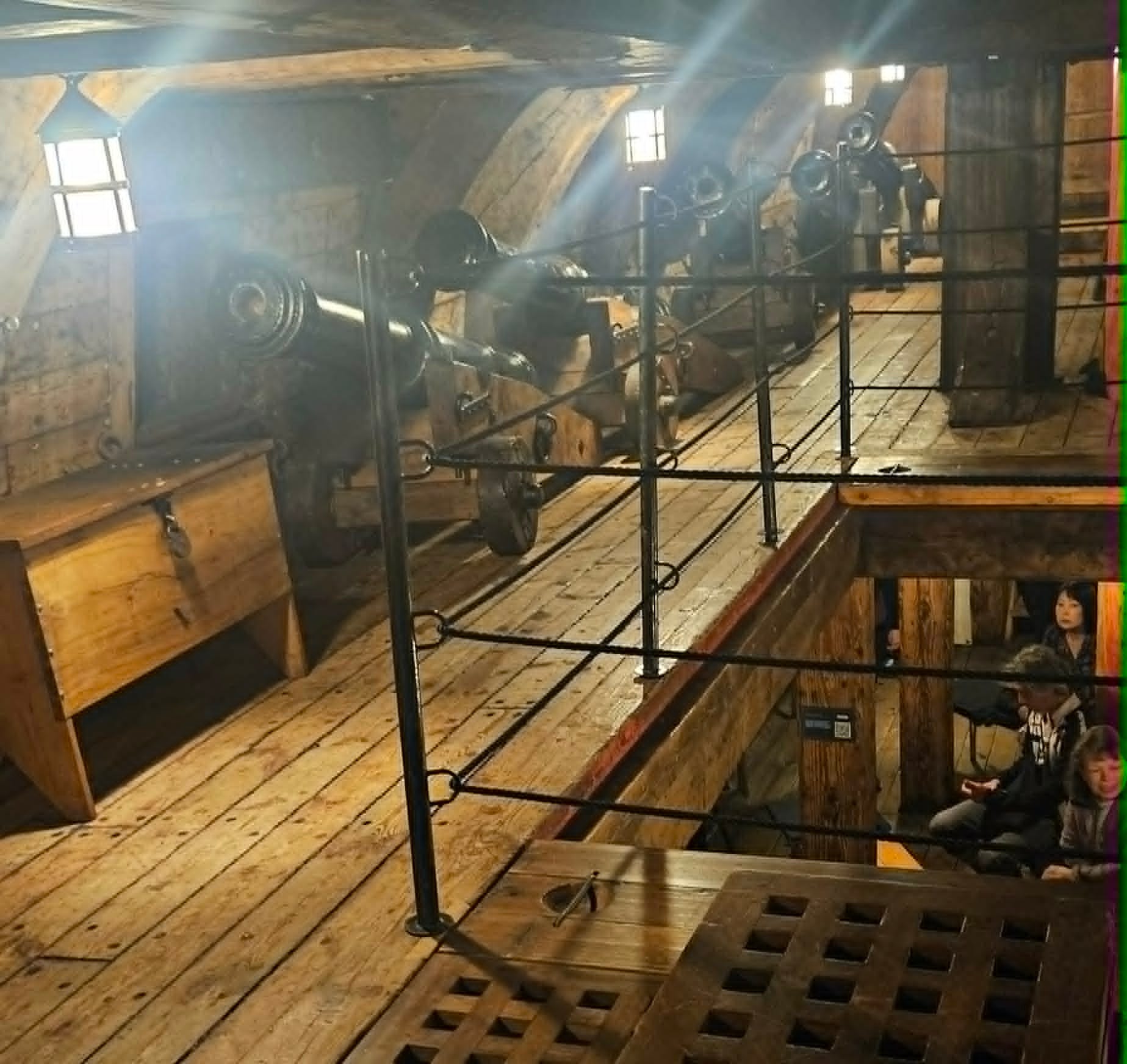
But this isn’t to say I didn’t enjoy going to the concert because I absolutely did. I’ve been in tons of odd venues and this was the most special one ever, indeed, it would be hard to compete with it. The performers were both playing acoustic guitars, and the sonics were great down there in the hold; as aurally resonant as the hard wood was aromatic. The room smelt and sounded like authenticity itself, and if there was any link at all between the events of 1587 and those of 1977, the year when Penetration had a hit with the song “Don’t Dictate,” it was that, and that alone. There was nothing the least bit modern about either the ship we sat on or the music we listened to: it could have been played on lutes in the renaissance or banjos in the south, it didn’t need anything but the strings and the fingers and the lungs of the artists, and the sentiments in all the songs were ones that will always resonate with humans, frustration, grief, joy, anger, irritation…the palette of punk, as it were.
But if there were any happy moments aboard that ship, then probably it was when someone was playing a sea shanty and everyone was singing along, and it probably didn’t sound all that different than what we were hearing. The past may be a different country, but they don’t do things THAT differently there. As Andrew Marvell says, “…at my back I always hear/time’s winged chariot hurrying near.” On board the Golden Hinde, the chariot is right overhead.
.
The whole purpose of reading at all is to come across such resonant phrases like "time is such a very shitty caretaker of our passions."
thank you.
I don’t think the Spanish named San Francisco after Francis of Drake. San Francisco was named after Assissi.