Analog Days
Ray Davies at the Fillmore, 10-12-95

So there was a fire, and Dave died. The house was still standing but the insides were a wreck, paint peeling off the walls, window frames twisted, blackened appliances. It smelt terrible. And after the police had been and gone, his house was broken into, so when we got there the place was a mess. Every room had detritus in it that spoke of his personal taste: broken bits of Fiestaware. Jars and jars of homemade pickles. Shiny retro bags stuffed with drill bits and other tools. Books: “Patriot” by Alexei Navalny. “The Wager,” by David Gann. “Packing For Mars” by Mary Roach. And of course, “The Long Goodbye.”
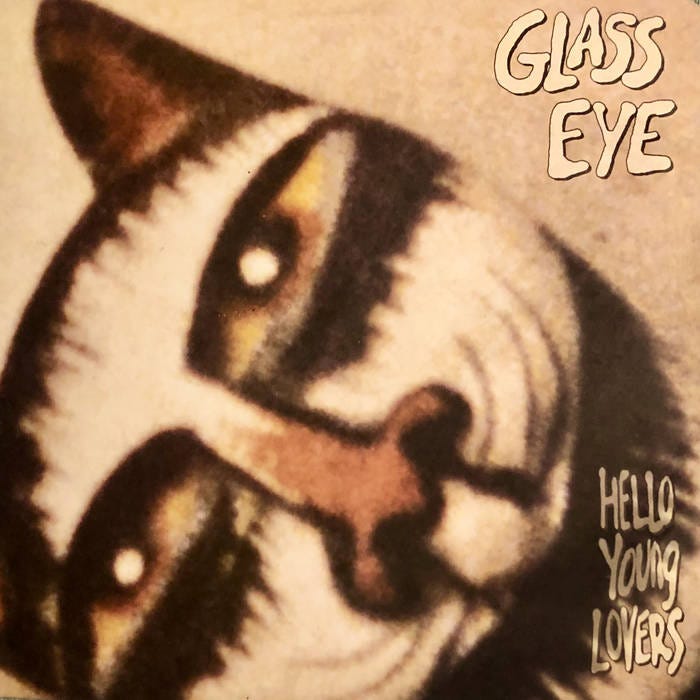
In the bedroom, on the floor, were a million t shirts with bands’ names on them, and 75% of them said Glass Eye, his absolute favorite.
Then there were the mix-tapes, because we came from the analog generation and that stuff – real stuff – was so important to us. When you look at the remains of an analog past, you are looking at someone’s inner life. And when it’s a person you lived with for so many years, then it’s your own inner life you’re looking at as well.
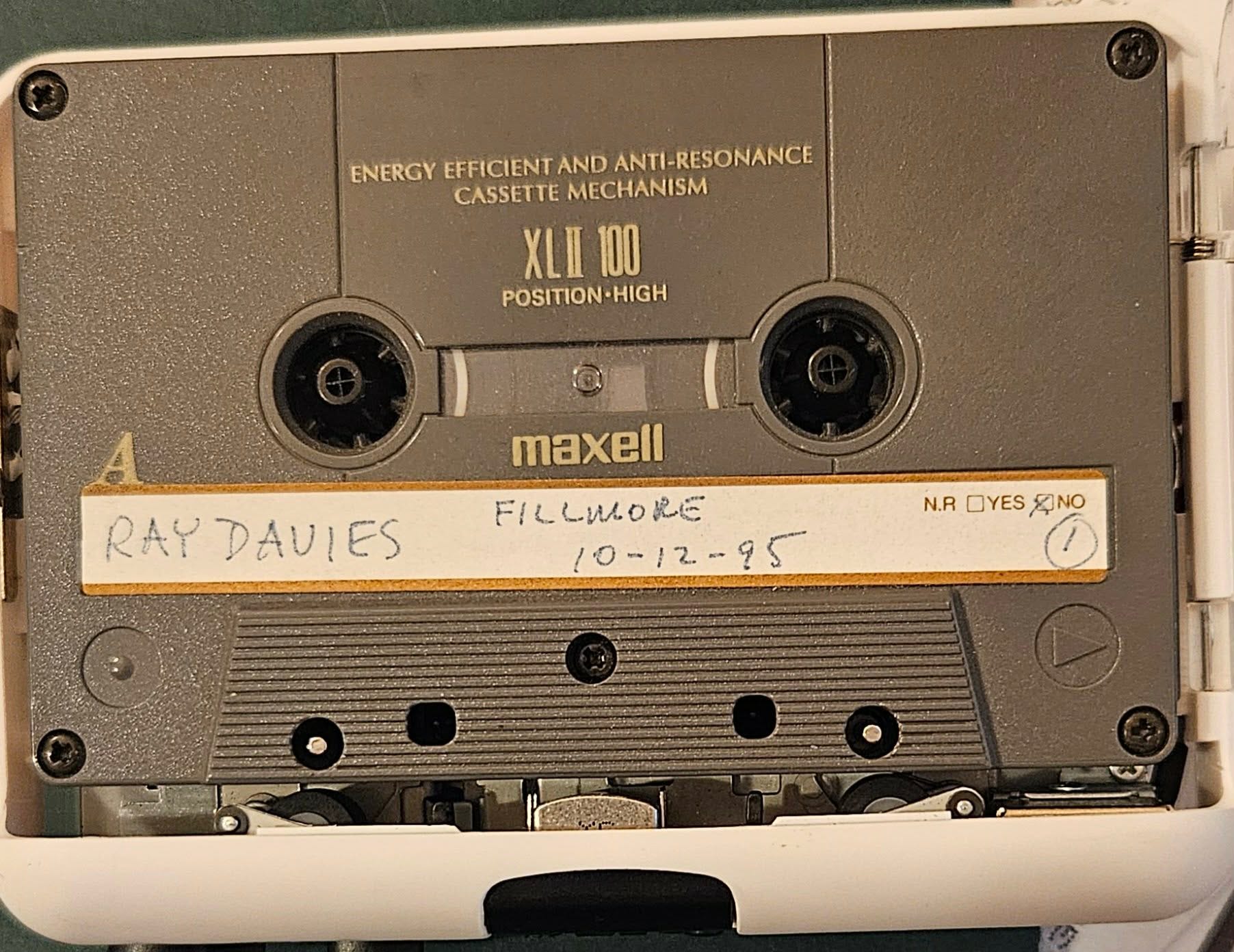
I picked up one cassette and noted that it said, “Ray Davies, the Fillmore, 10-12-1995.”
“Hey, this is mine,” I said to C, and I meant not only that it had once belonged to me, and that I had left it behind all those years ago when her dad and I split up, but that the memory it contained was mine as well, the memory we shared of it, the intensity of going to that particular show together. There was going to be so much contained on that thin bit of magnetic tape, and I couldn’t take it. So I put it in my bag and forgot about it.
Then one day recently at practice one of the kids I coach, aged 15, was revealed to be unable to use a key. Not the key to a pie chart or a musical key, like A minor, but an actual metal key, specifically the one that unlocks the equipment room at the pool.
“Well, how am I supposed to know how to use that thing?” she said. “It’s VINTAGE. And I’m YOUNG.”
“I’m young too,” scoffed her friend. “And I know how to use it.”
“I,” she added proudly, “know how to use a cassette deck!”
The exchange reminded me of that cassette, and, a few weeks having passed and having calmed down a bit, I hankered to play it. But I realized that though I too know how to use a cassette deck, I didn’t actually HAVE one anymore, so I acquired one.
For fun I ordered a see-through one, so you can see all the mechanisms at work as it spins. It felt very visceral. Also for fun I asked C if she could figure out how to open it, put the batteries in, the tape itself in, and turn up the volume, and she struggled for a bit trying to do those things before I snatched it away and showed her. She probably could have figured it out herself but it was nice for me to reconnect with the hardwired feeling of doing those things with my hands, and also I don’t think she understood how fragile a tape like that was. It occurred to me that, at 31 years old, it was possible it no longer worked and I didn’t want to risk it getting spoiled. Remember how we used to put a pencil into the wheels between spindles to wind them up better?
Remember pressing play?
Remember tape hiss?
Remember how, when side 1 is over, you flip it – or else make the player play in reverse?
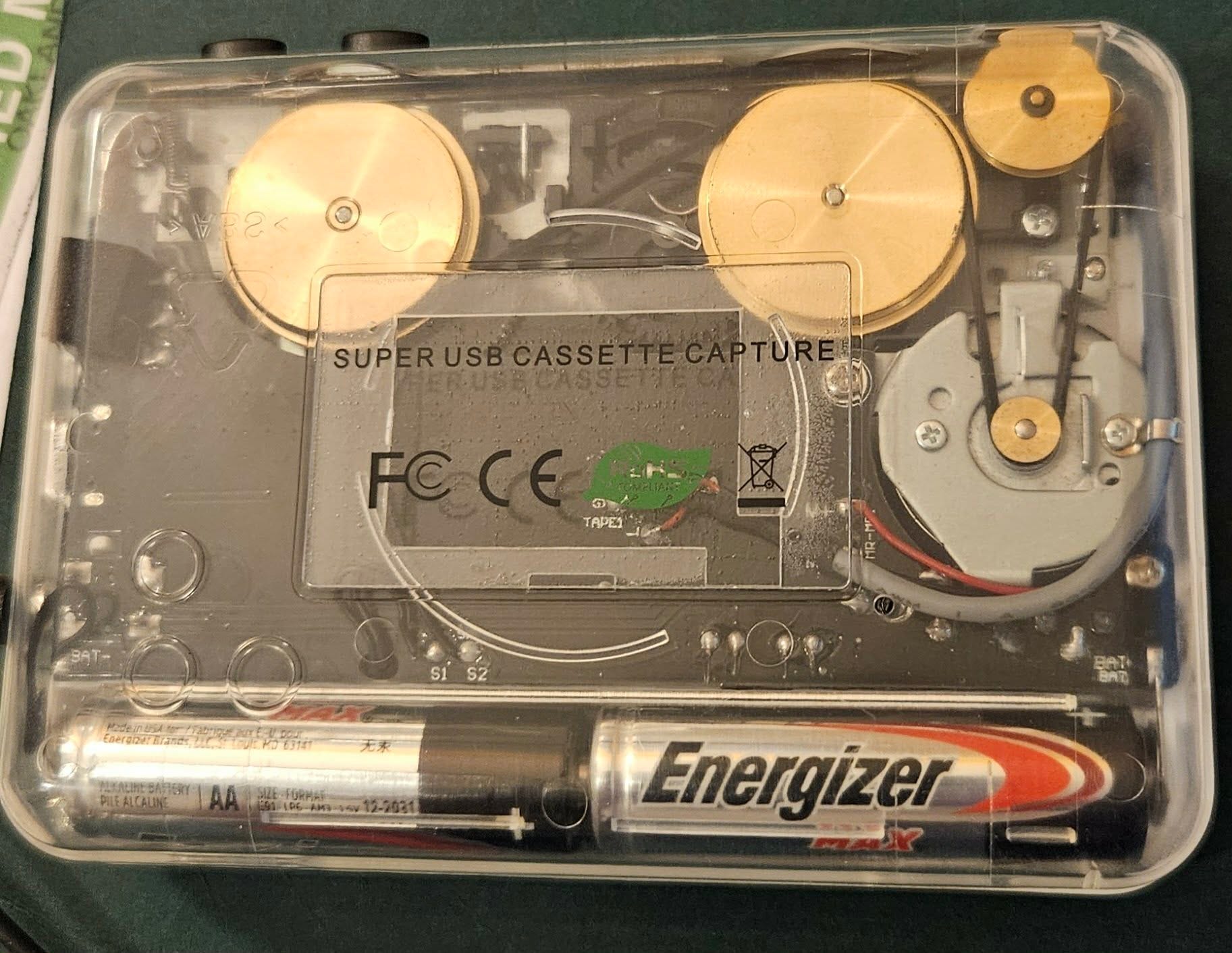
It was a vintage experience alright, and so was lying on my bed stock-still for 120 minutes and listening to it through headphones (because the player didn’t have an external amplifier). If anything, that was the hardest part. I haven’t done something like that in ages. Today, everyone goes around with headphones on, listening to music throughout their daily life, but not me. I notice that they are also always multi-tasking, and that’s not how you’re supposed to listen. You’re supposed to concentrate. Yes, you can do some things simultaneously, like make bead bracelets, sort your laundry, or play with the kitten, but you can’t – or I should say, shouldn’t -- do other things, like read, or play word games, or do your homework. You should immerse yourself, and that’s what I did, and wow, did it feel intense.
It’s possible that getting this cassette from Dave’s ruined house made the immersion experience heavier than it might have been. Also heavy: listening to it on the first day that the US was bombing Iran. These were saddening things. But it was also a lovely thing, because I think that it is also quite possible that this cassette was actually a record of the very best show I ever went to? And given my history, that is saying a lot.
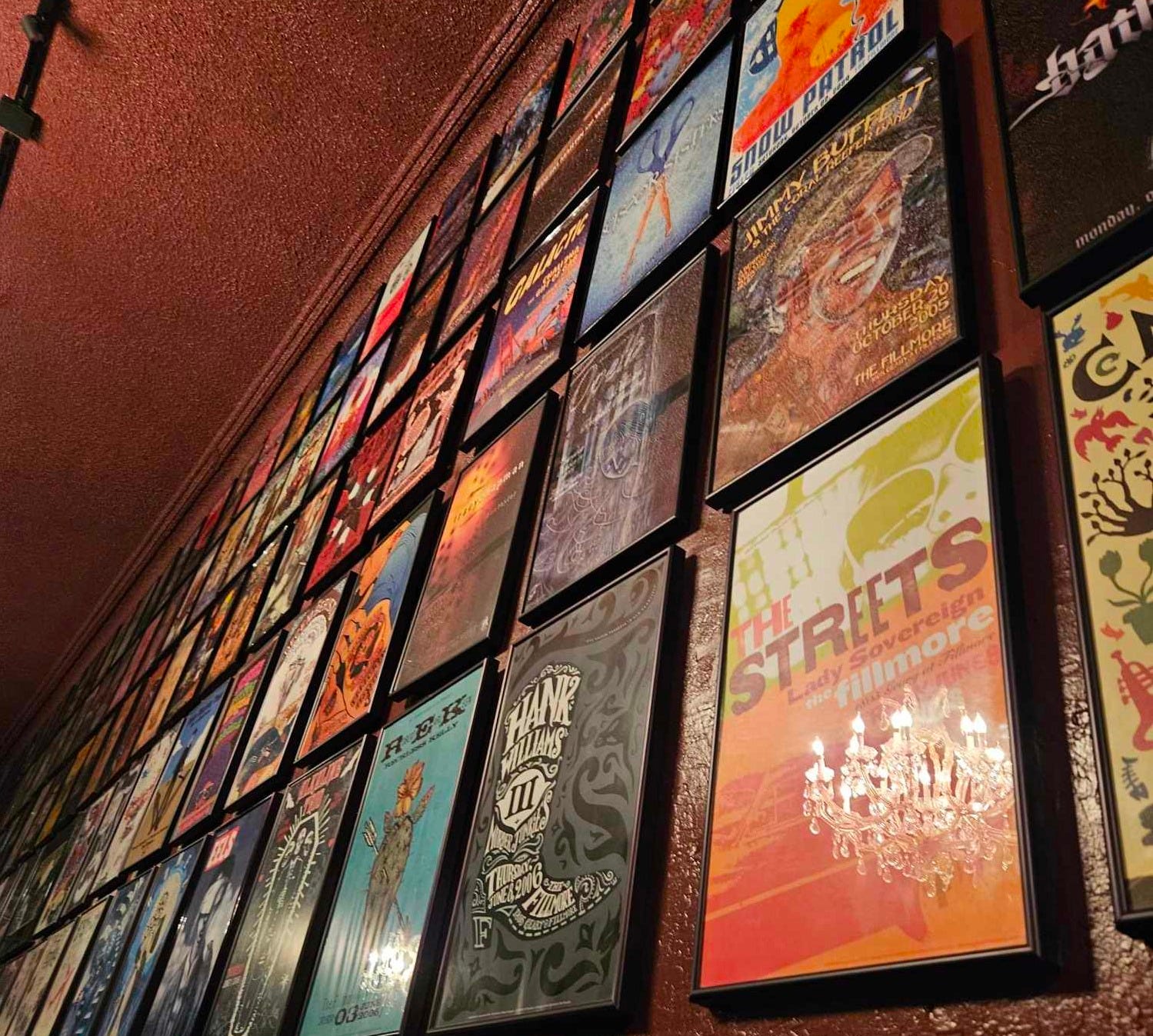
Oct. 12, 1995 was my Dad’s birthday. On that day, in 1995, Ray Davies was 49 years old, considerably younger than I am now although of course I thought he was old. He was doing a solo tour in order to promote his book “X-Ray: The Unauthorized Autobiography,” which was a memoir about growing up in post-War London, going to art school, forming the Kinks, opening for the Beatles, touring the U.S. for the first time, and basically experiencing what might now be called a classic ‘mid-century modern’ youth, London style. Well, experiencing it, and also shaping it, in his own way.
The book is great, my absolute favorite music memoir. I don’t have it anymore or I’d quote you the passage about England winning the World Cup in 1966. But the tour, on which he read from the book and sang songs from it, accompanying himself on acoustic guitar (with one backing musician, Pete Mathieson, on drums) was even better. You can see versions of it on YouTube but for reasons I can’t quite explain, it feels important to me to listen to this show, i.e. the one I was actually at. The set consists of “Victoria,” “Lazing On A Sunday Afternoon,” “20th Century Man,” “You Really Got Me,” All Day and All Of The Night,” “Dedicated Follower of Fashion,” “Autumn Almanac,” “Village Green,” “Days, “Waterloo Sunset,” “Lola,” “I Go To Sleep,” and a whole lot more.
There are also a number of songs penned for the book, like “Art School Girl, “Julie Finkel,” and “London Song” (quoted below), but mostly it is him narrating his experience of growing up in London and participating in that captivating, unusual, and utterly gone-gone era.
And if you’re ever up on Highgate Hill on a clear day
You can see right down to Leicester Square
Crystal Palace, Clapham Common, right down to Streatham Hill
North and South, I feel that I’m a Londoner still
A CD version of it was released in 2006, under the title “Storyteller: X-Ray”, but my memory of the actual show was that it was a lot more extensive and better than the record, and the tape proves that beyond a doubt. You could (and should) read the book and listen to the record, or look up versions of the whole show which are floating around on YouTube. All will show that both the show and the material were far better than I even thought at the time, because Ray Davies writes the kind of music that stands outside of time. His songs seem to get more relevant and therefore more poignant as time and experience teach us its ever more awful lessons about life.
Like when he says:
“I’m a product of the century which started at the height of class conscious imperialism, and ended with a society so reduced to totalitarianist commonness, that in my last years at art college, the saying, ‘mediocrity rises’ proliferated.”
And then he sings:
I was born in a welfare state, ruled by bureaucracy, controlled by civil servants, and people dressed in grey…Got no privacy. Got no liberty. Because 20th century people took it all away.
Sigh. Is it fair to say those words hit harder now that I’m listening to them here in the 21st century? I think they do, partly because death seems to reshape how you experience the music you experienced together with someone, but also because the world he describes, and his sadness at its passing, feels more like how I feel now about now. When I used to listen to Kinks LPs like “Village Green Preservation Society,” “Arthur” and “Something Else” I thought they were such poignant and tuneful descriptions of London in the 1940s and 50s – i.e. the time when my Dad was growing up there. Thus they matched my delight in books like “Lucky Jim” and “The Fountain Overflows” because they illustrated that past so well, and also what made that past worth escaping.
Ironically, it was Ray Davies’ work, his songs and his life story, that turned that grim black and white era into living color. Perhaps what made listening to that story this week was that nowadays MY past – the 90s – seems like a simpler and more poignant long gone time, and the things that I did there which were once in living color now seem to have become black and white.
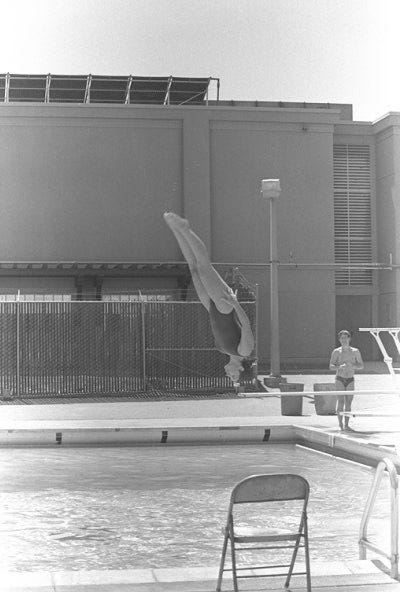
In the end, I had to teach my diver how to use a metal key, a skill she claims she has no use for - much like diving, the sport I coach her in, but then, having a bunch of useless skills are part of old age, and in addition to diving and using a cassette deck, my useless skills include listening to, and writing about, old music. After Dave died, I said to my brother, “It’s funny how when someone dies you suddenly feel differently about them,” and he said, “Yes, it’s like how you don’t really know how you feel about a book until you’re finished with it.” Maybe that explains why a 30 year old tape of Ray Davies sounded even better than it did when I first experienced it, because the history of the Kinks has a period on it, it isn’t going to change now, nor would I ever want it to.