
The Unbearable Whiteness of Skiing
Milan, music and maybe some miracles at the Winter Olympics.

Sometimes I think there are two types of people in the world, those who enjoy watching the Olympics and those who don’t. I fall in the latter, though the older I get, the more boring, corrupt, and goofy they reveal themselves to be. The Winter Olympics are particularly goofy, given the sports themselves and the outfits people have to wear to do them: the giant eyeball helmets, the skintight suits, the ballerina outfits, etc. This year not one but three ice skaters dressed as characters from Dune, and another guy skated as a Minion.

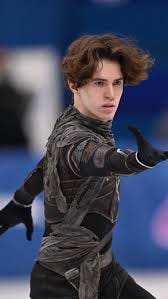
The individual skaters aren’t required to conform to a theme, but the music many of them choose did anyway. Here’s just a few of the songs I heard:
--Goodbye Yellow Brick Road (Elton John)
--Like a Virgin (Madonna)
--Send in the Clowns (Judy Collins)
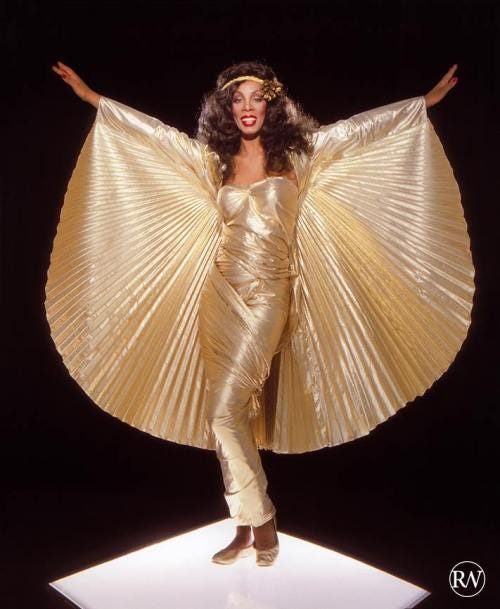
-- Last Dance (Donna Summer)
--MacArthur Park (The Donna Summer version)
--What A Wonderful World (performed by Lexi Walker and the Piano Guys)--Goodbye Yellow Brick Road (Elton John)
--Like a Virgin (Madonna)
--Send in the Clowns (Judy Collins)
-- Last Dance (Donna Summer)
--MacArthur Park (The Donna Summer version)
--What A Wonderful World (performed by Lexi Walker and the Piano Guys)--Goodbye Yellow Brick Road (Elton John)
--Like a Virgin (Madonna)
--Send in the Clowns (Judy Collins)
-- Last Dance (Donna Summer)
--MacArthur Park (The Donna Summer version)
--What A Wonderful World (performed by Lexi Walker and the Piano Guys)
I’m not exactly sure what the theme is, but it’s a big emotional change from last Olympics, when one of the Russian competitors skated to the song “I Want To Be Your Dog.” She said she was influenced by the film “Cruella” but it was hard not to think it was a coded message for help regarding her cruel termagent of a coach, Eteri Tutberidze, who was seen flogging her skaters – not literally, but verbally – to the point where she has now been banned from the kiss and cry. The 2022 final ended in chaos and opprobrium; NBC did a whole segment on how incredibly mismanaged, frightening and even physically abusive the sport was. Even the IOC, not known to respond to that kind of thing, have subsequently increased the minimum age for the competitors to 17.
Elsewhere in those games, Russian and Chinese athletes dominated in some sports, and were also caught doping, though little was done to stop that. And a few days after the Olympics concluded, Russia invaded Ukraine, having seemingly waited for that moment; one of the things I highly disliked that year was seeing Putin being saluted at the opening ceremonies.
But that was then. In the ensuing four years, the world has changed a lot, and almost entirely for the worse. How weird would it be though if the Olympics was the one place where that wasn’t the trajectory?
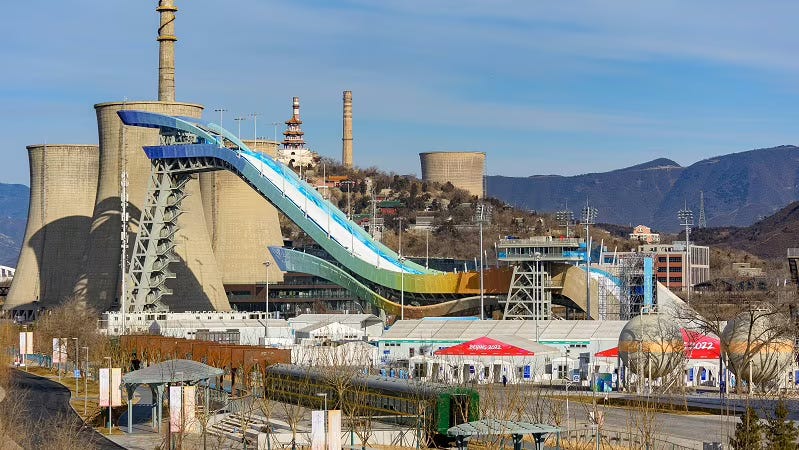
In a 1996 article titled The Unbearable Whiteness of Skiing, Annie Goldman writes that (American, specifically Western, ski resorts like Aspen, Vail, Taos and Squaw Valley (sic)) “serve as compelling historical sites where relations of race and ethnicity, class, and labor enable (d) the carefree frolicking of those on the slopes,” and this seems doubly true of the Winter Olympics. Obviously the countries with more mountains will do better in the Winter Olympics, and the countries with more money to build ski ramps and resorts and bobsled runs do better on top of that. It’s all a big shell game, produced and exhibited for us so that advertisers can grab us by the pocketbook.
And yet. There is something about the Olympics that allows us to gauge certain things about global politics, national mood, and the values we are told to hold dear. To me these Olympics are most interesting for the weird volte face that the media has taken about - wait for it - American values as a whole.
Put briefly, this is the first Olympics I’ve ever watched where the media and the world have been super kind to the American competitors who have failed to medal: not just kind, but laudatory. Ilia Malinin, for example, pitched as the “quad god” for months by advertisers, networks, magazines and so on, choked big time. But instead of berating or shaming him or acting endlessly disappointed, as they have done in the past -- instead of even letting their faces fall -- the media is lauding him for his good sportsmanship, and using him to remind us that hey: WE ALL MAKE MISTAKES.
This is great, obviously. It’s a fantastic message! I endorse it wholeheartedly. But it’s also...unexpected? Since when America? Since when have sports stars - and by extension us - been told it’s actually OK to lose?
But that’s what I heard, again and again, around the story of Ilia Malinin, and his was only one story which was spun that way. Lindsay Vonn also tanked, and her story is now one of resilience and bravery. Same with Amber Glenn, Chloe Kim, and many others slated to “bring home the gold,” as the network likes to put it. And even our girl Alysa Liu, who did pull off the old cliché’d narrative with a gold medal run, managed to upset expectations by insisting throughout the entire competition that she was just there for fun, that she didn’t care if she medaled, and that she felt totally relaxed throughout the proceedings, because, she said, being there was enough.
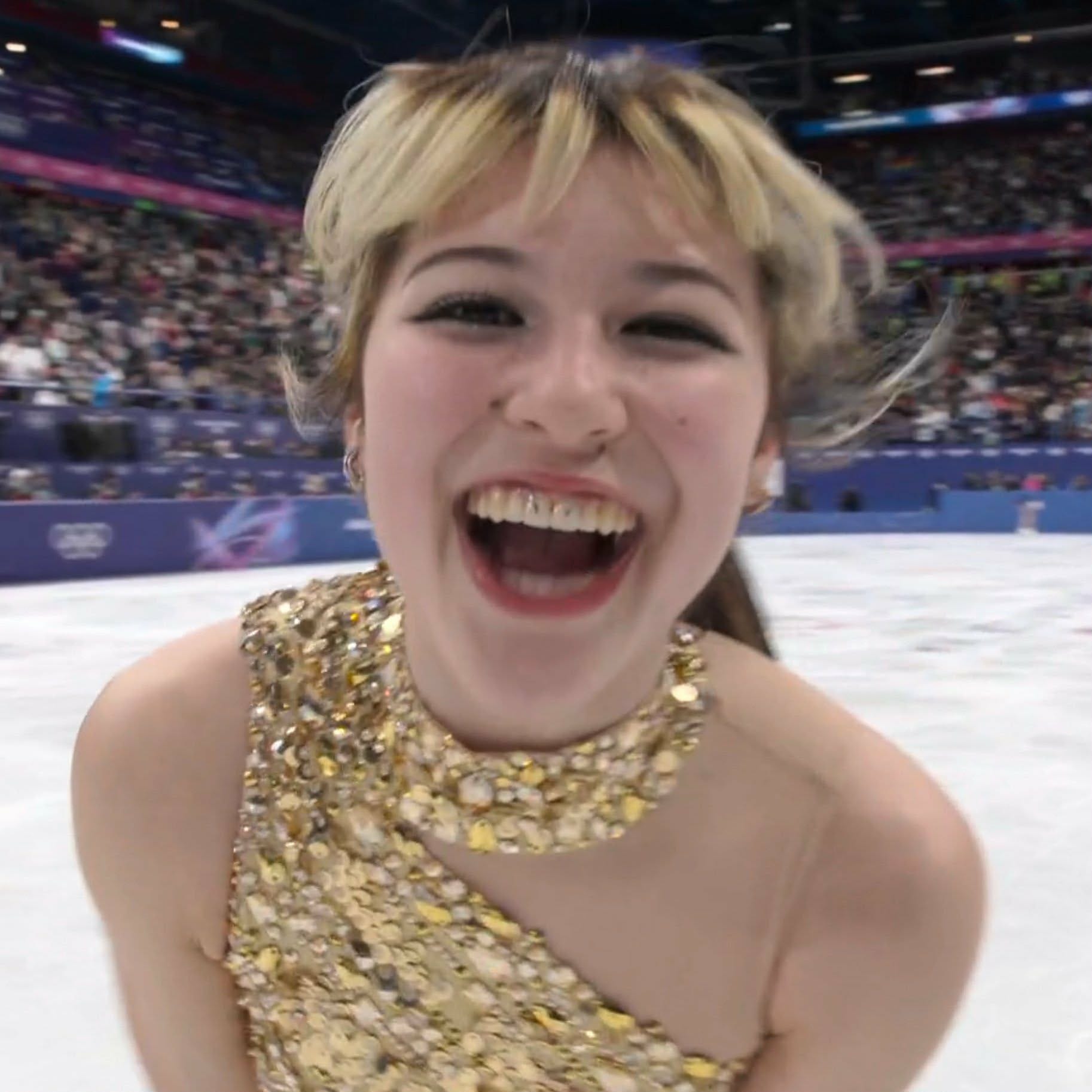
Alysa was a huge breath of fresh air, but even she went smack against the dicta of the US sports narratives, which invariably say that sports stories need to end in victory. If you’ve ever had anything to do with sports, you know that’s not real life, and one can only hope that sports movies going forward will have plots that mimic the media’s new tone, where someone does a sport just until they are sick of it, ditches their parents’ coaching for someone more neutral, or is asked to ski down a mountain on a torn ACL and says, “Hell no.”

I have thoughts on why the media’s message has changed so much. It may reflect the fact that American athletes aren’t that great at winter sports and are therefore bound to place far down the medal count. It may reflect the fact that AMERICA is in that position right now: globally, politically, even economically, we are now losers, so being America, our message now is, let’s smile and accept it and even maybe, tell people it’s better to be loser?
Possibly, it’s just a reaction to the prevailing political mood: people, today, are in need of a jolt of kindness and good sportsmanship, to offset what they are actually seeing on the ground here, which is the polar opposite.
Or maybe bullying and showing off really IS going out of style, and we are seeing it on the playing field first. My favorite quote about music is, “Music is a herald, for change is inscribed in noise faster than it transforms society,” meaning that music sometimes tells us what’s going to happen next. Maybe that’s the same with sports coverage, maybe it too changes faster than the zeitgeist. Wouldn’t that be neat?
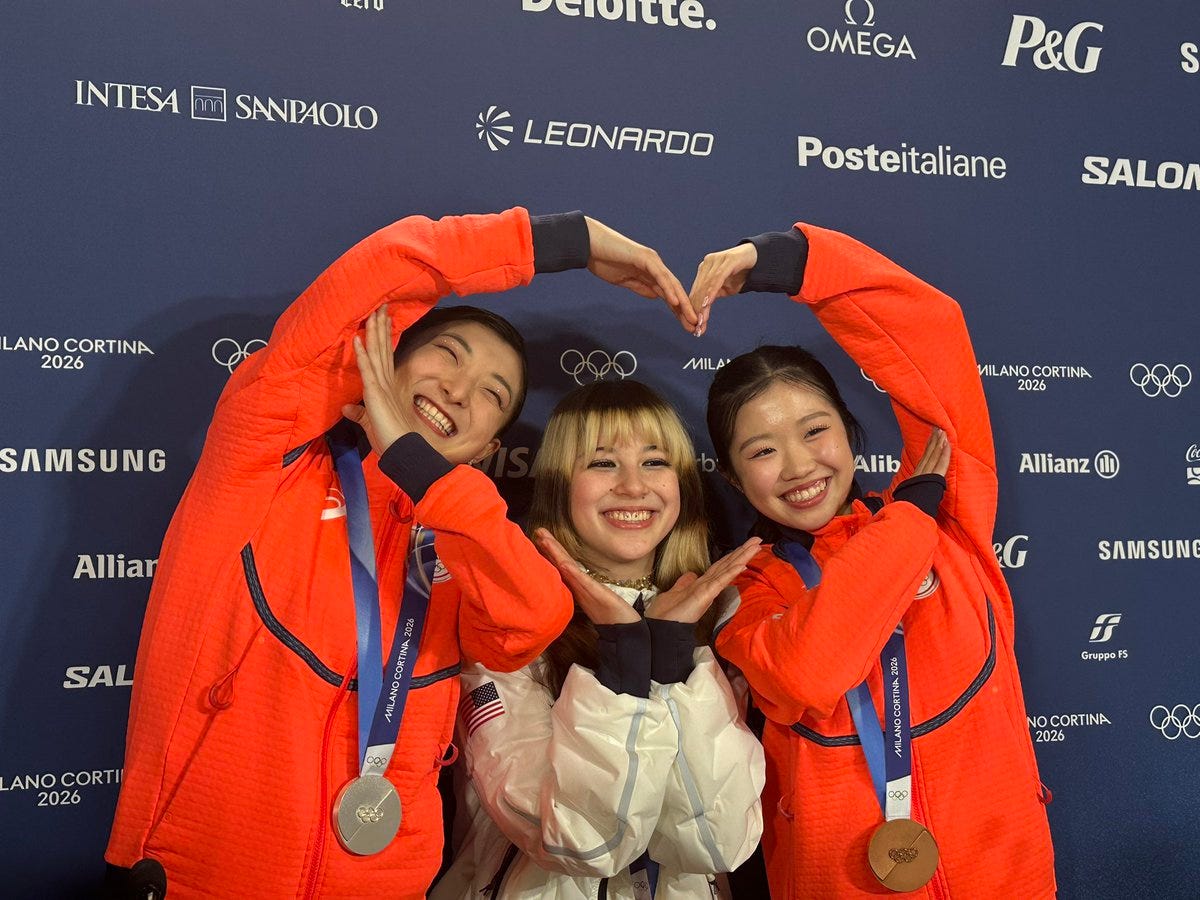
As I said, directly after the last Olympics, the world was plunged into two horrid wars, which have truly changed the world order, and thinking back, you could almost feel that about to happen there, especially during the awful drama on the figure skating ice. Winter was coming, to coin a phrase. But if the mood at the Milan Olympics is anything to go by, than the snow may be about to melt and summer is icumen in.